

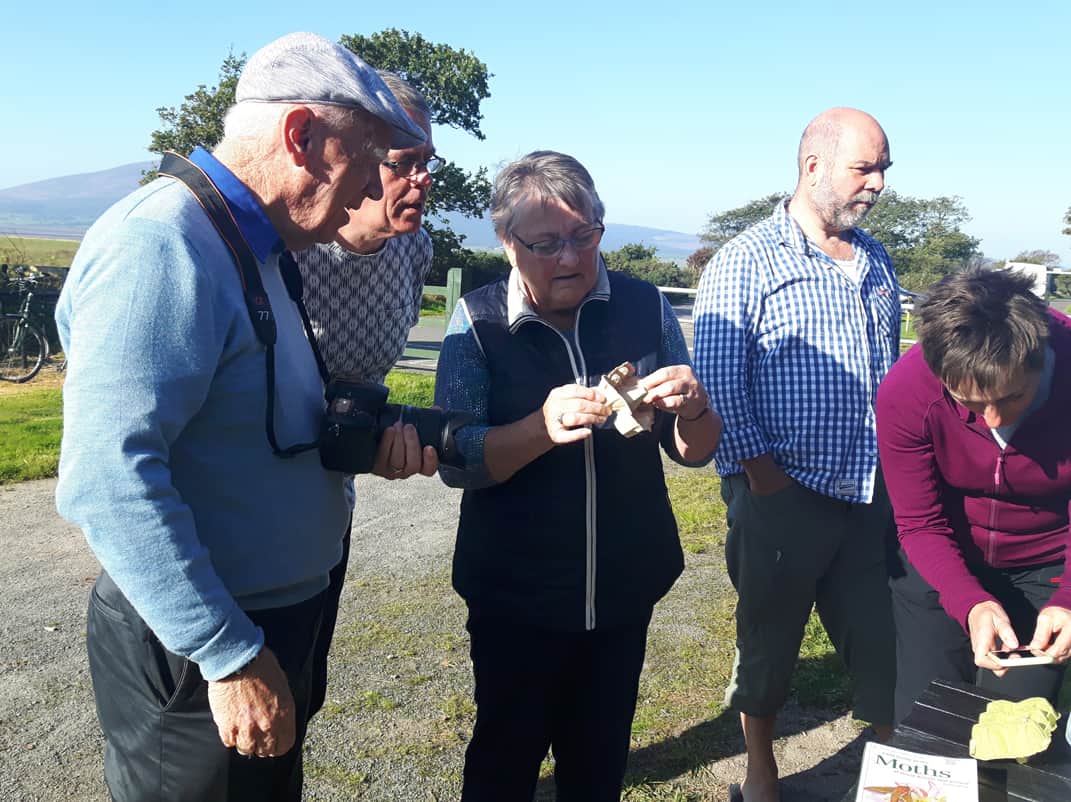
We got up early and cycled along to the second impromptu moth morning at Castle Corner, organised by Stuart Graham and Alison Robertson, and boy were we glad we did!
Alison and Stuart had set out the moth traps the night before, in and around Castle woods, and all in all there were a fantastic 32 different species caught (and released)! See the list, in alphabetical order, at the bottom of this page. Some of the names are wonderful!
Quite a few folk turned up, including several interested parties from the Castle Corner site – one couple from near Luton will be going home to make their own moth trap to share the magic of moths with their grandchildren!
Without further ado, here are the stars of the show (no offence Alison and Stuart):
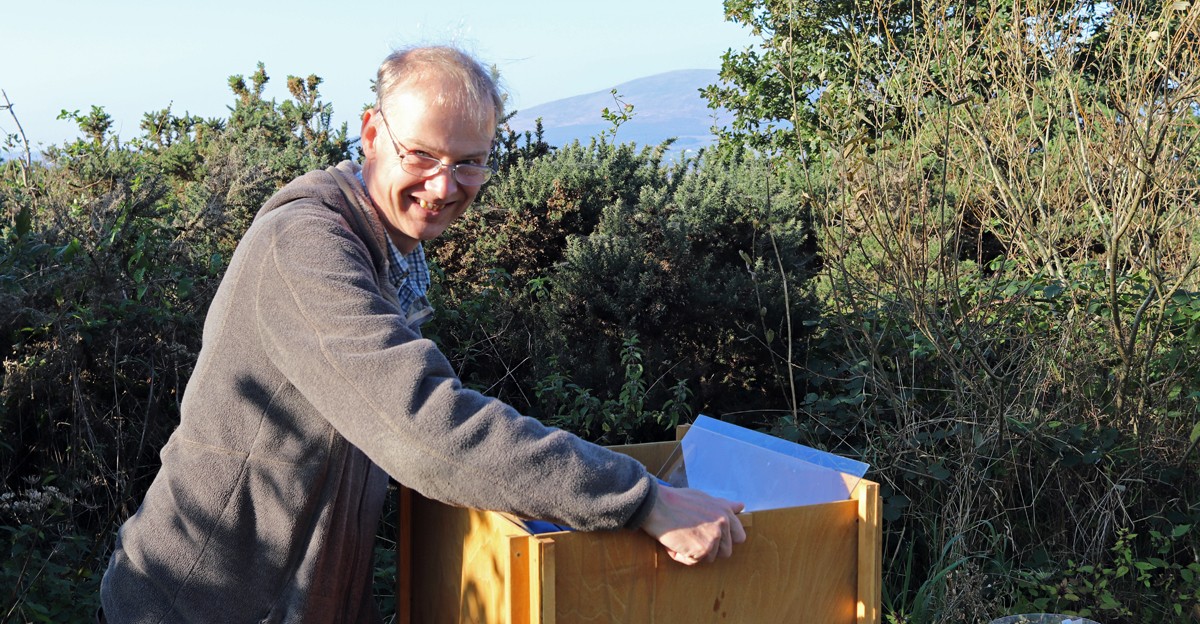
Oh, okay then, here’s Stuart bringing the first of the moth traps out of the shade!
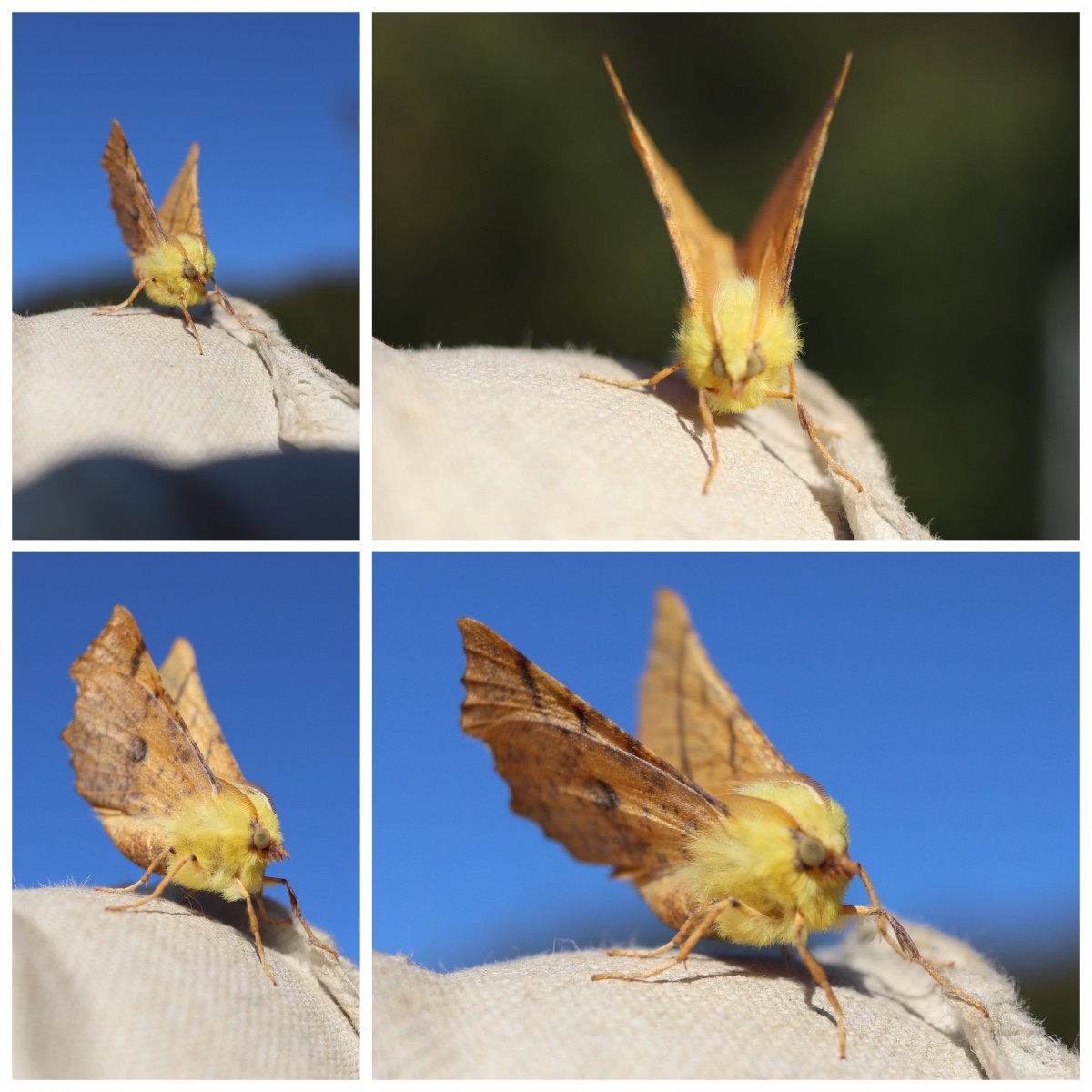
Along with the main image (above), this is a canary-shouldered thorn, a beauty we remembered from a previous moth night.

On reflection, here’s another of the canary-shouldered thorn!
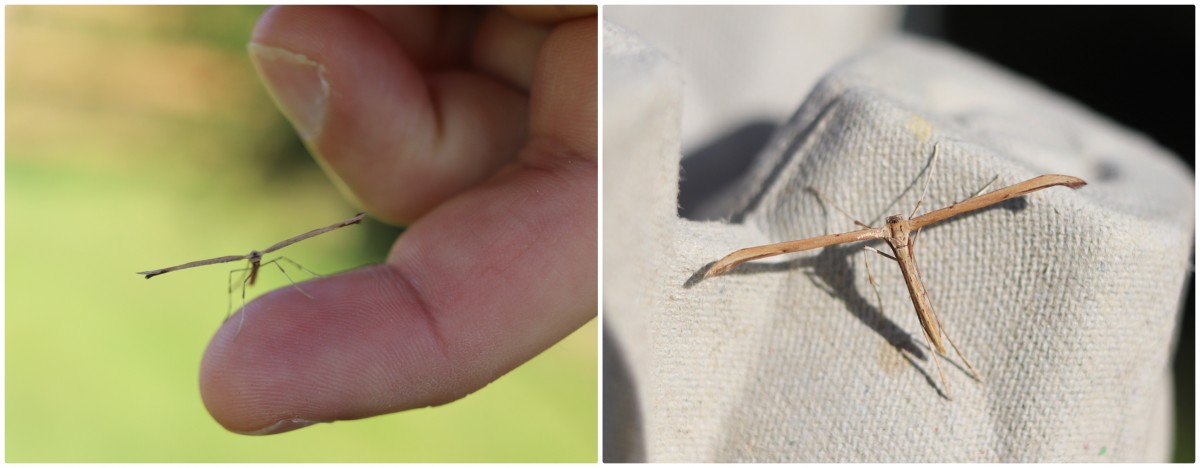
…and here is one of the strangest looking moths, emmelina monodactyla, the common plume moth!
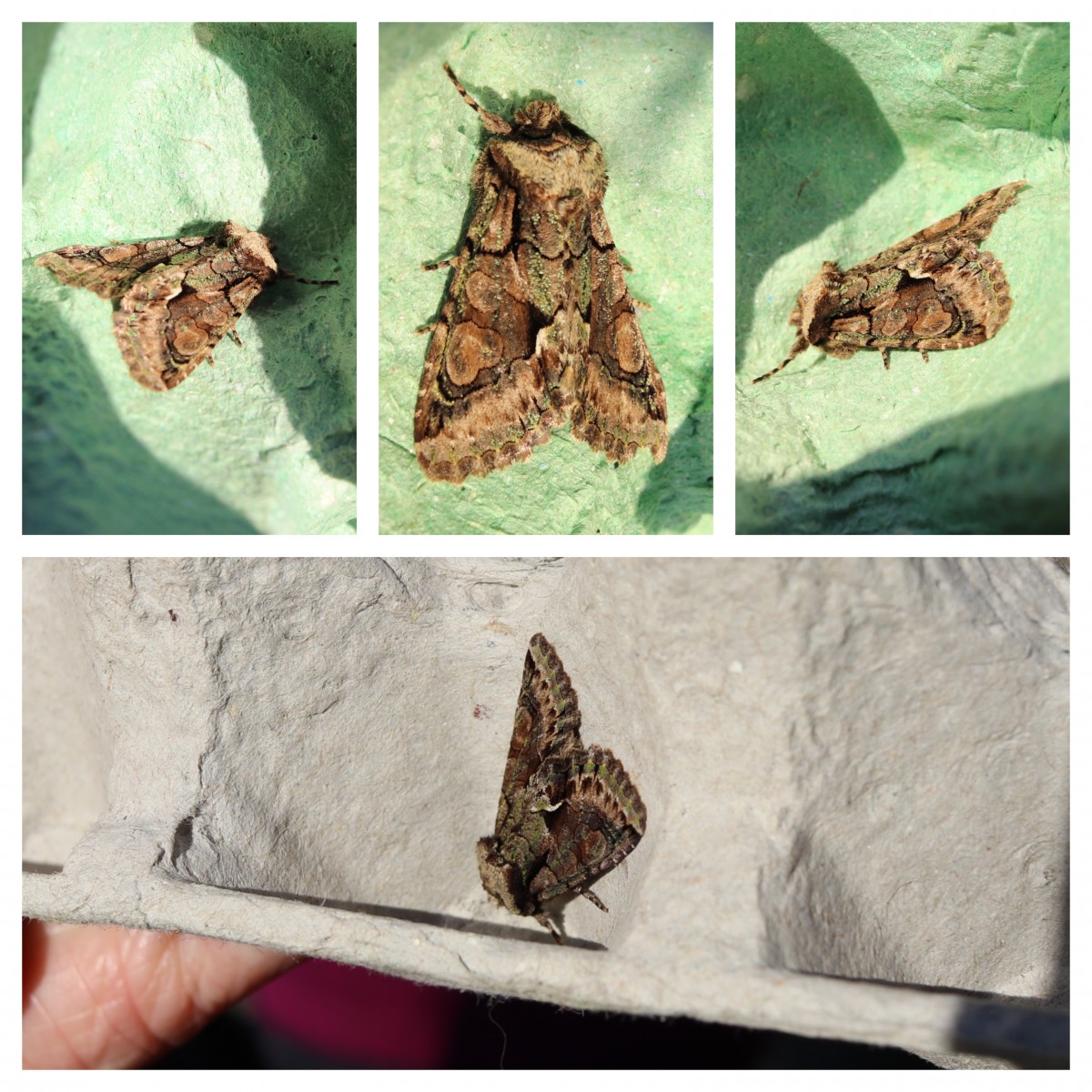
A more subtle specimen, the green-brindled crescent is definitely worth a closer look… iridescent scales catch the light and shine like jewels on its wings!
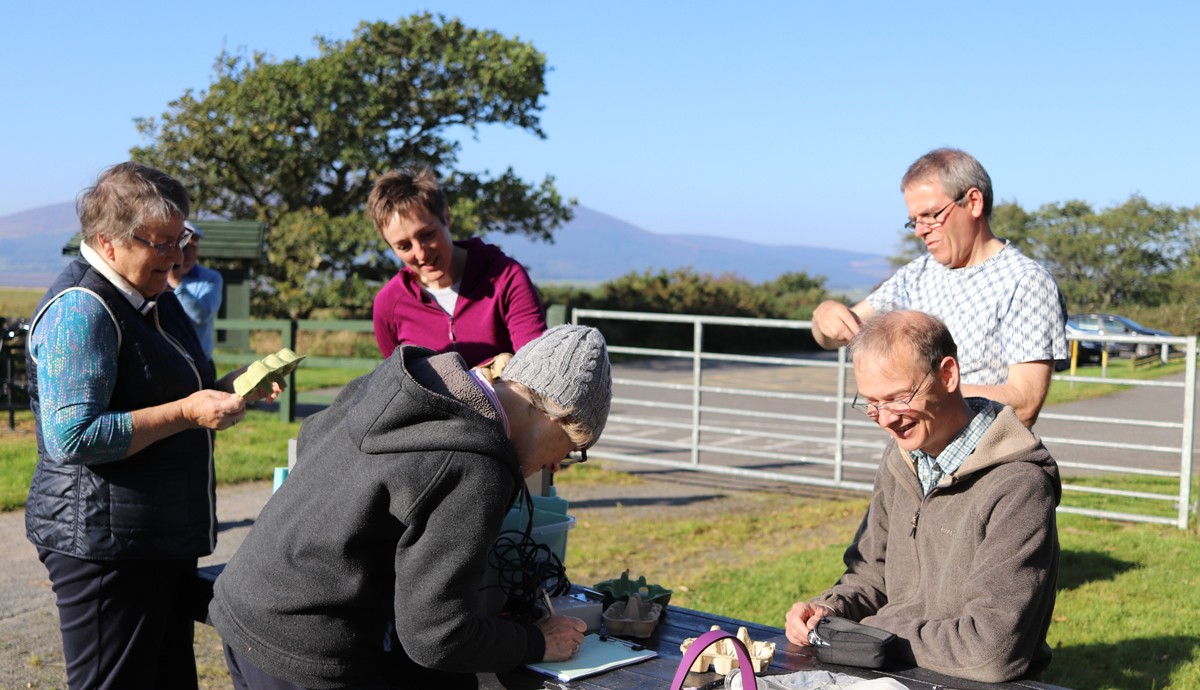
The mothly crew getting stuck in!

Not a moth at all, this harvestman (an arachnid, but not a spider) was one of many lured by the light of the traps!

Another harvestman – one of 23 kinds of harvestmen in the UK.
Did you know:
- Harvestmen taste horrible to frogs
- The red mites on this spider are likely to be ‘phoretic’ which means they are harmless and hanging on for the ride
- Opiliones is the latin name for harvestmen
- They have been found to drink red ink, but not black
See this link for more (much more!)
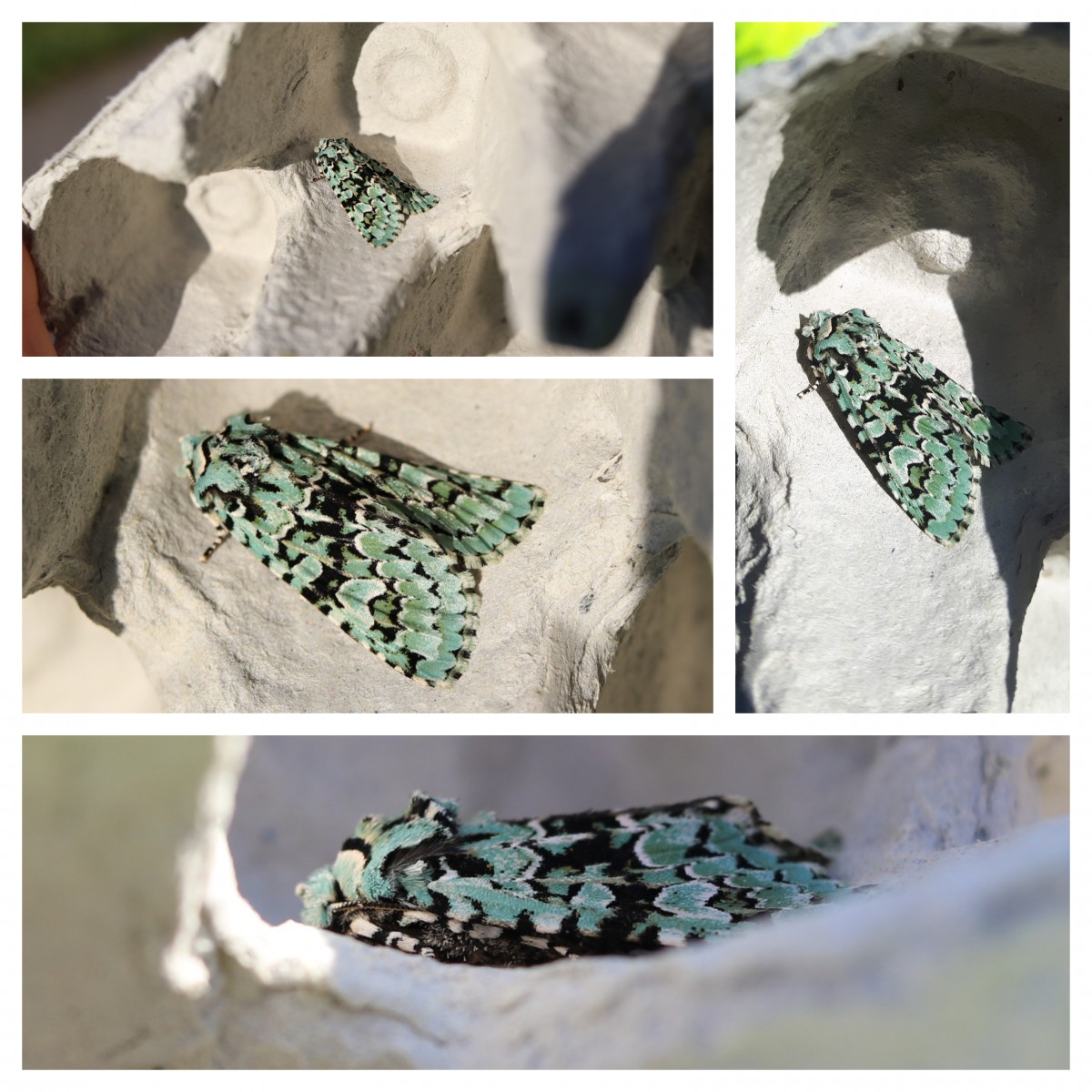
Back to moths, this stunning beauty brightened our (already bright) day – merveille du jour – ‘wonder of the day’! This was an exciting find for Alison and Stuart.
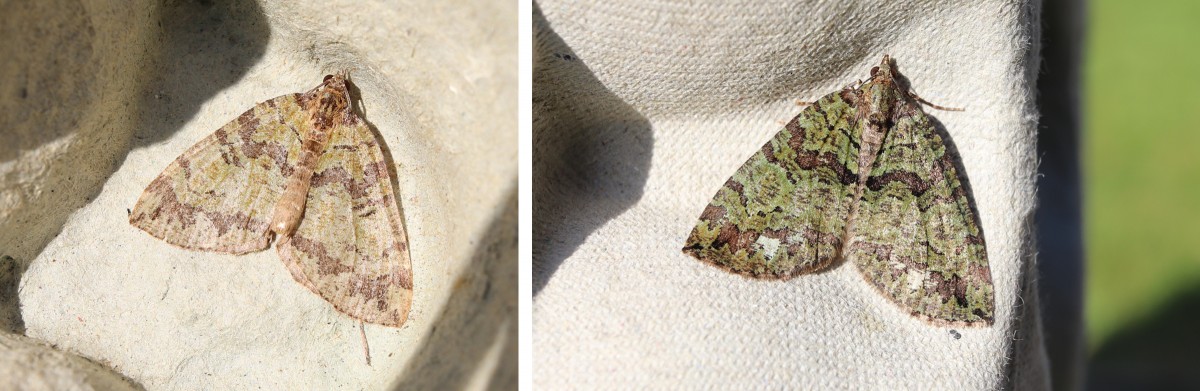
A bit of a ‘spot the difference’ puzzle for you! Some moths can look very similar, but be different species, and other moths can look quite different, but in fact be the same!
This will be an ‘answers on a postcard’ type of puzzler – come back later and see if you were right!

Another one, if anyone would like to hazard a guess!
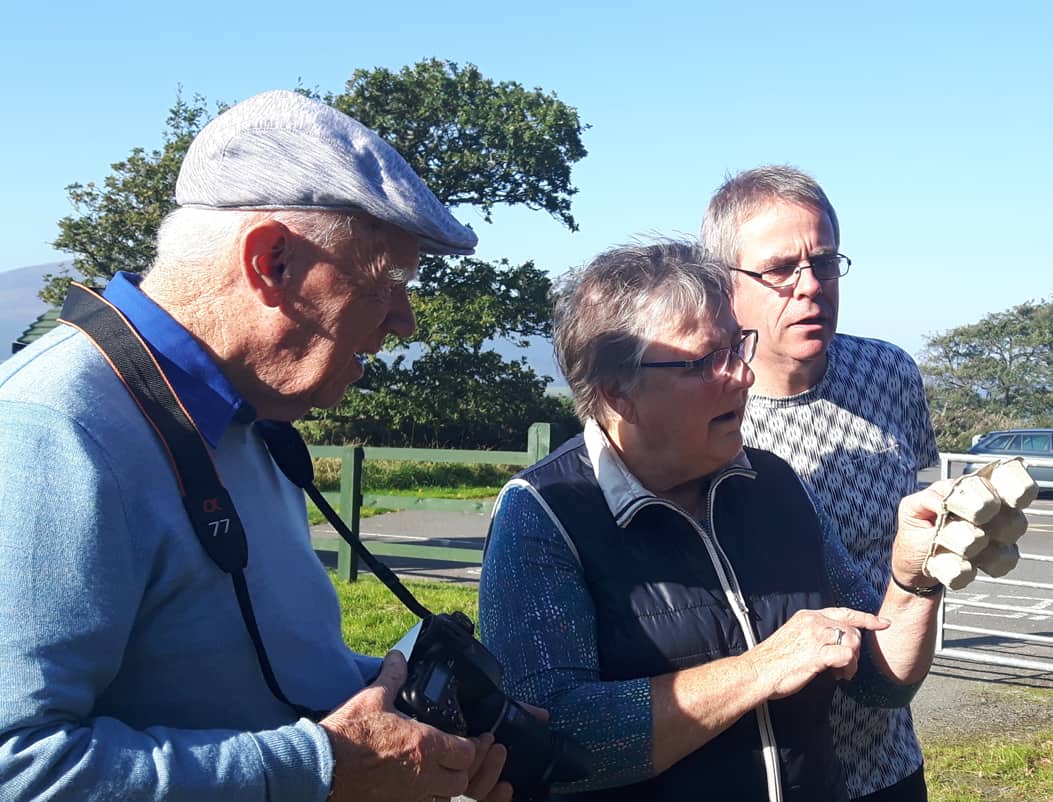
Having a closer look…
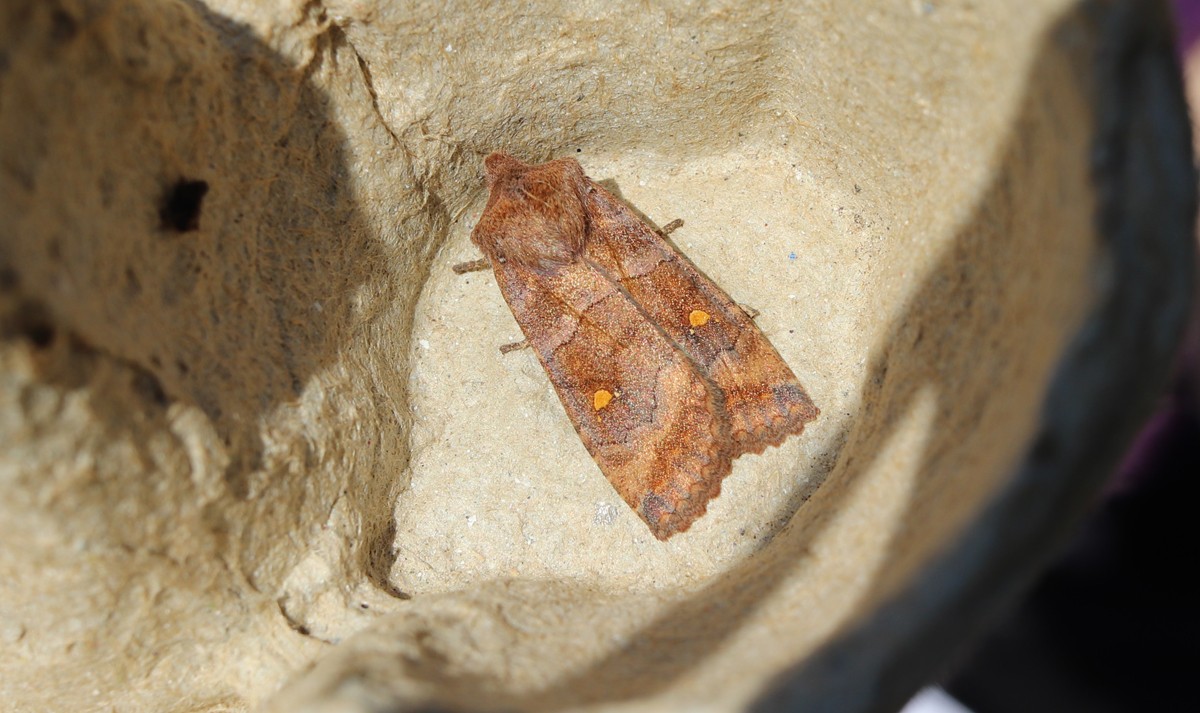
Aptly named this one, making it one of the easier ones to try and remember – satellite!
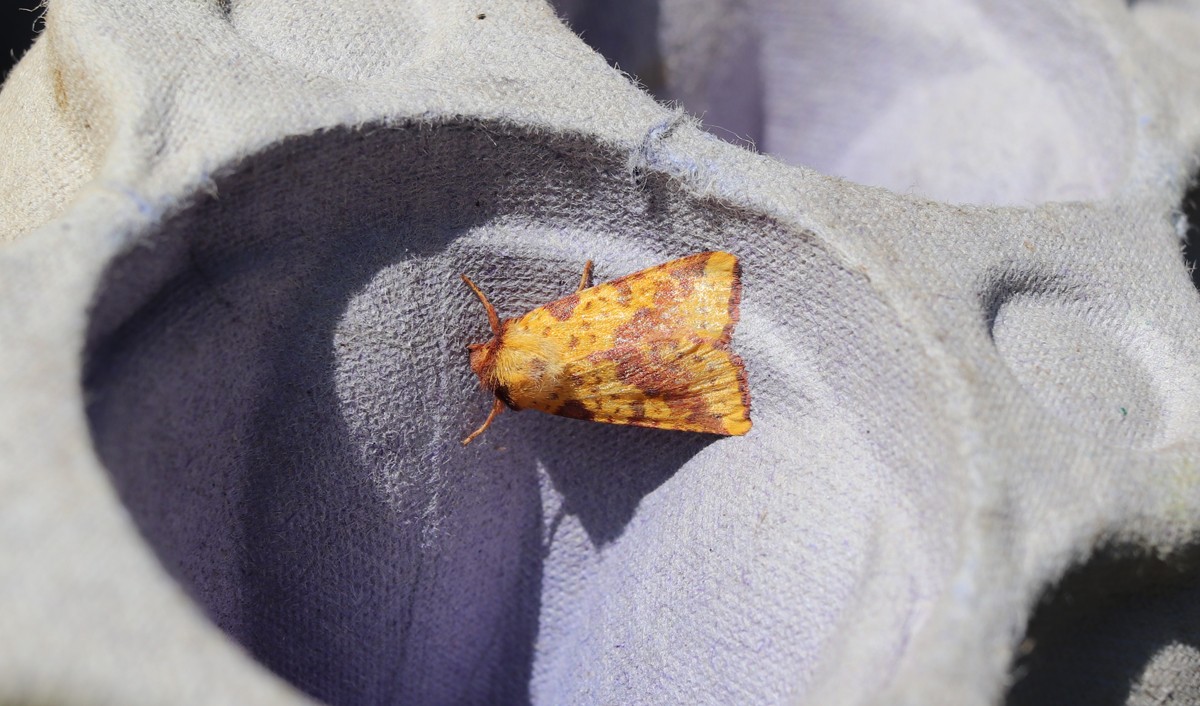
Unlike this one, which some of us struggled with… pink (though it’s not pink) barred (dubious) sallow (rhymes with mallow, which IS pink!). Pink-barred sallow…
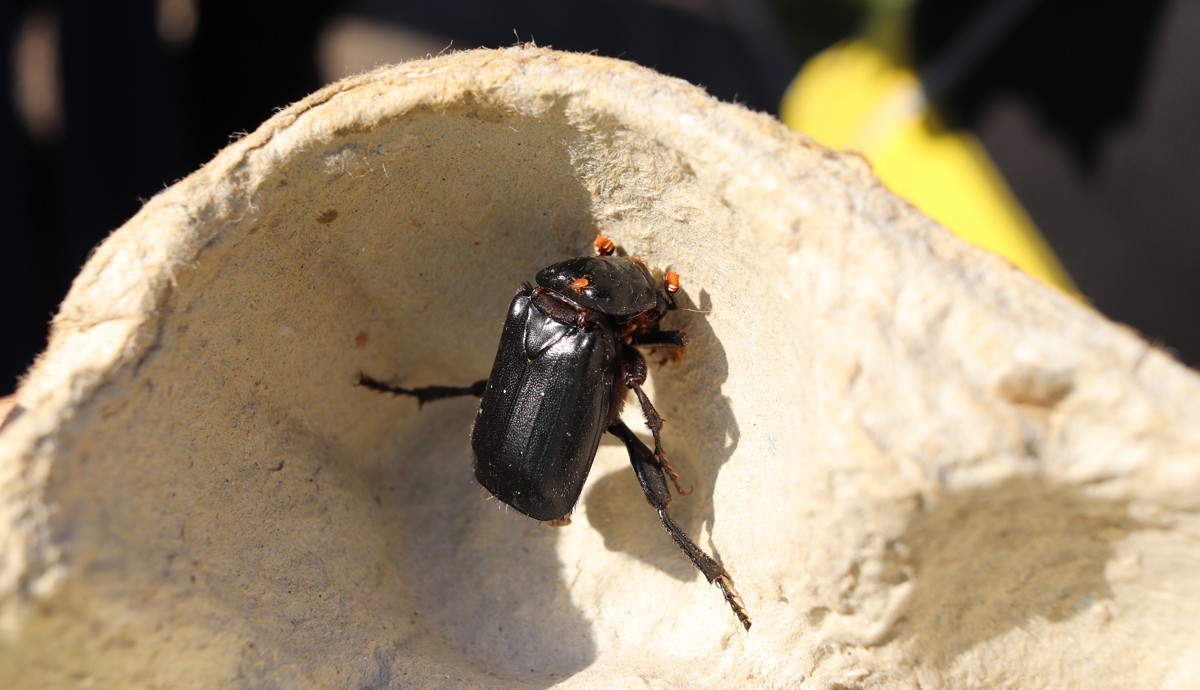
An imposter – a beetle, also covered in mites
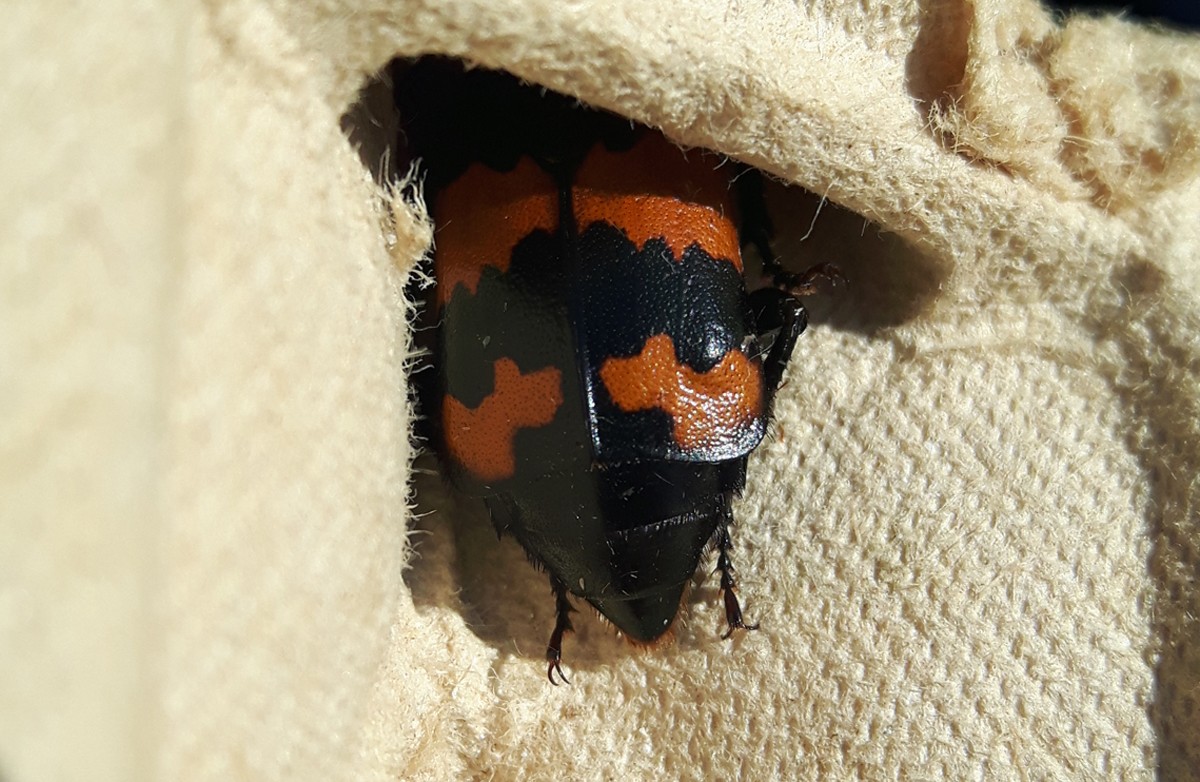
…and another beetle, a common sexton beetle – a burrower, described here as ‘an undertaker of the animal world, it buries dead animals like mice and birds, and feeds and breeds on the corpses’. Who would have thought this went on under our very noses in Caerlaverock?!
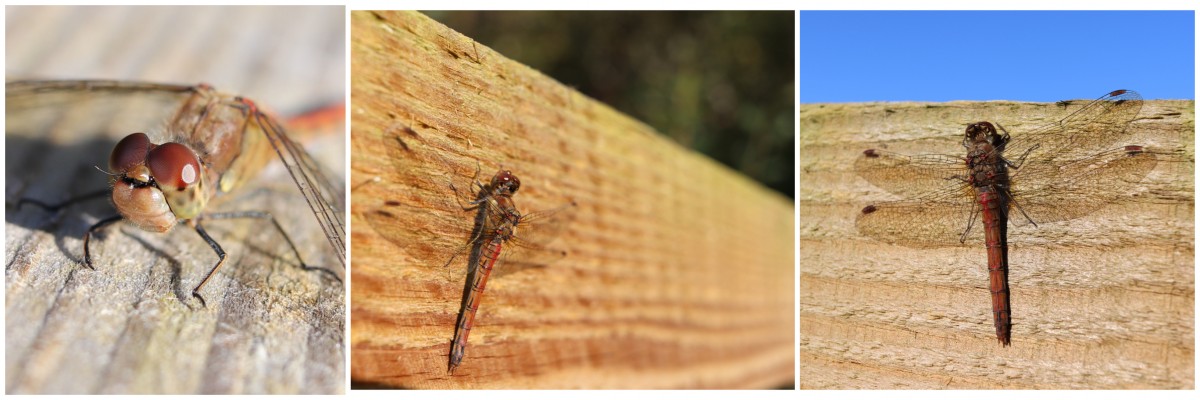
A beautiful common darter, one of four or five which basked in the sun near our wee gathered group.
Fascinating things, egg boxes!
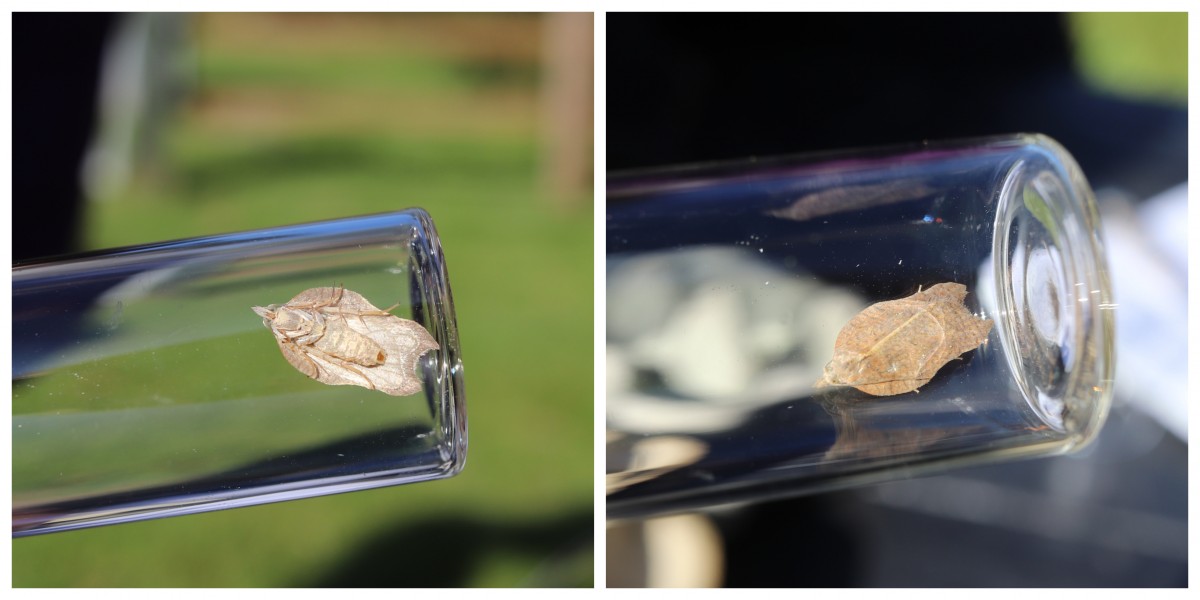
This one Alison had to take home to identify – the violin shape of this moth is a disguise – it doesn’t look like a moth shape to predators (nor us!) – Acleris emargana.
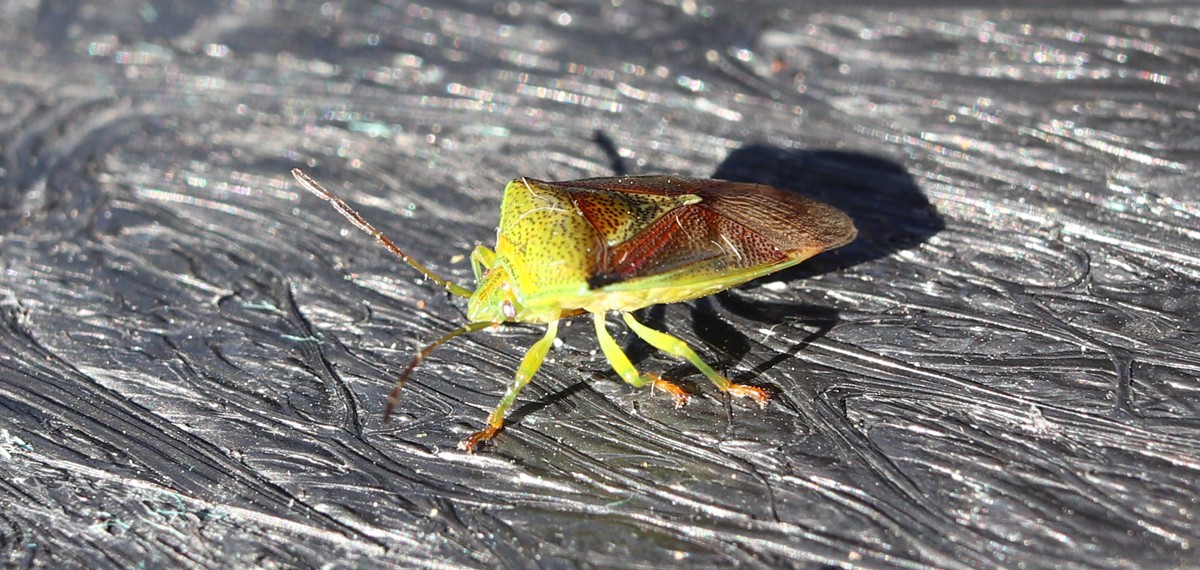
A wonderful shield bug! Do you remember Alison’s fantastic photo of shield bug eggs? Here is a recent blog she wrote about The Summer of Shield Bugs, 2019 for the SouthWest Scotland Environmental Information Centre.
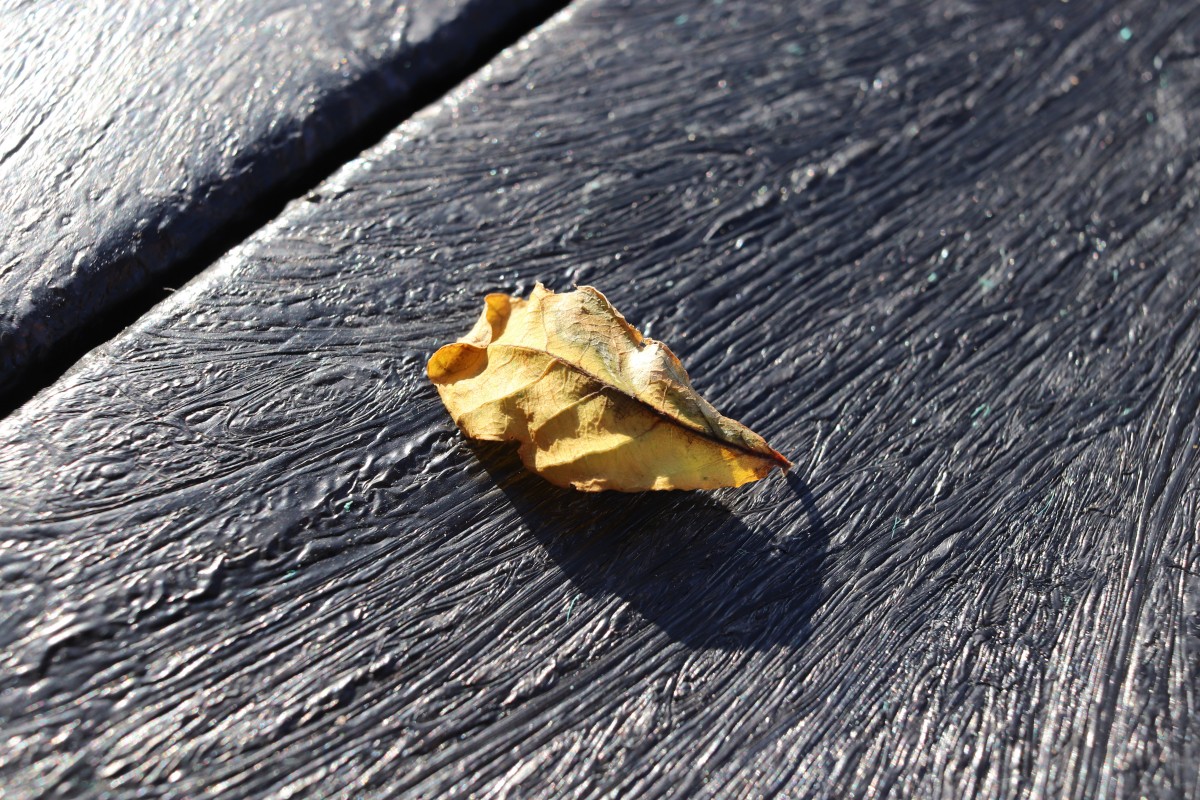
This one had us flummoxed for a while… Can you guess what it is?
Answer at the bottom of the page!
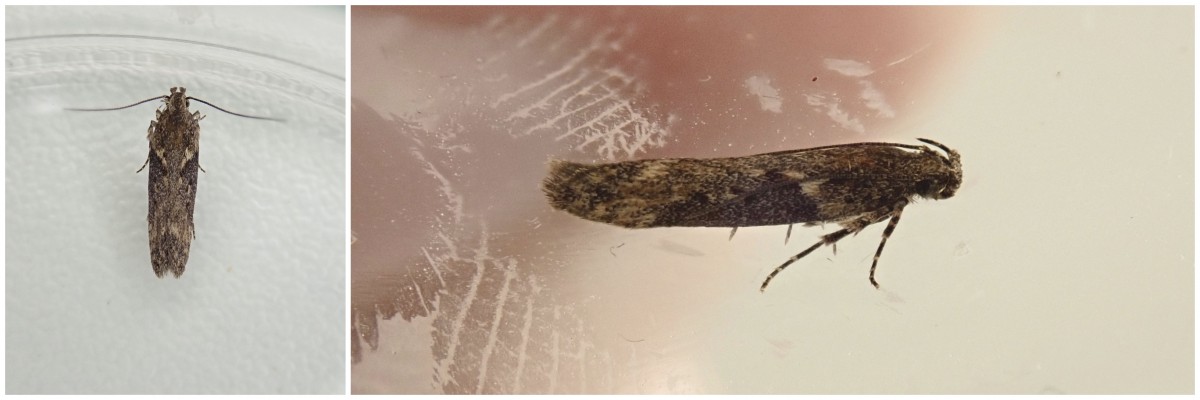
And last but not least, just in the nick of time, Alison heard back from a Lancashire expert with confirmation that this wee moth is indeed a scrobipalpa costella!
Look out for one more moth morning this year, weather permitting, we had no idea that there would still be moths flying in the winter months…
Here are the 32:
Acleris emargana
Brindled Green
Canary-shouldered Thorn
Common Marbled Carpet
Copper Underwing agg.
Dark Chestnut
Emmelina monodactyla
Epinotia nisella
Flame
Green Carpet
Green-brindled Crescent
Honeysuckle Moth
July Highflier
Large Fruit-tree Tortrix
Large Wainscot
Large Yellow Underwing
Merveille du Jour
Pinion-streaked Snout
Pink-barred Sallow
Red-line Quaker
Rosy Rustic
Sallow
Satellite
Scrobipalpa costella (to be confirmed)
September Thorn
Setaceous Hebrew Character
Silver Y
Small Square-spot
Small Wainscot
Snout
Spruce Carpet
Streak
Answer: a leaf! :)
Alison and Stuart, and all involved with capturing this moment, I just wanted to thank you all for a fabulous morning looking at moths. Who knew so many beautiful varieties could exist in one space. As the couple from near Luton (Dunstable) mentioned in your blog we will definitely be making our own moth trap. We back on to the Totternhoe Knolls, a site a special scientific interest and with lots of ivy in our garden, I’m sure we will have a few species to identify to get our grandsons hooked. Thank you for inspiring us…
Thank you for your encouraging message! We thoroughly enjoyed the morning too, and are delighted that you are going to inspire a new generation of moth experts!
Hope you enjoyed the rest of your holiday in Scotland! Haste ye back!
Shall pass this message on to Alison and Stuart.
Jayne, thank you so much for your comments. I do hope you – and your grandsons! – get into moth trapping. Even leaving a light on and the window open can attract some moths (though fewer and fewer as winter approaches), and it sounds as though you’ve got good habitat around you. It’d be worth making contact with the Bedfordshire County Moth Recorders http://www.vc30moths.org.uk/records.htm. Thank you again for your nice comments, good luck, and best wishes from the Caerlaverock moths. Alison.
Alison, thank you for the link, I’ll take a look. We woke up this morning to find a Plume moth on our dining room wall, it was so nice to know what it was. We wouldn’t have given it a second glance if we’d not spent some time with you all.