
Have you seen more butterflies than usual in Caerlaverock this year?
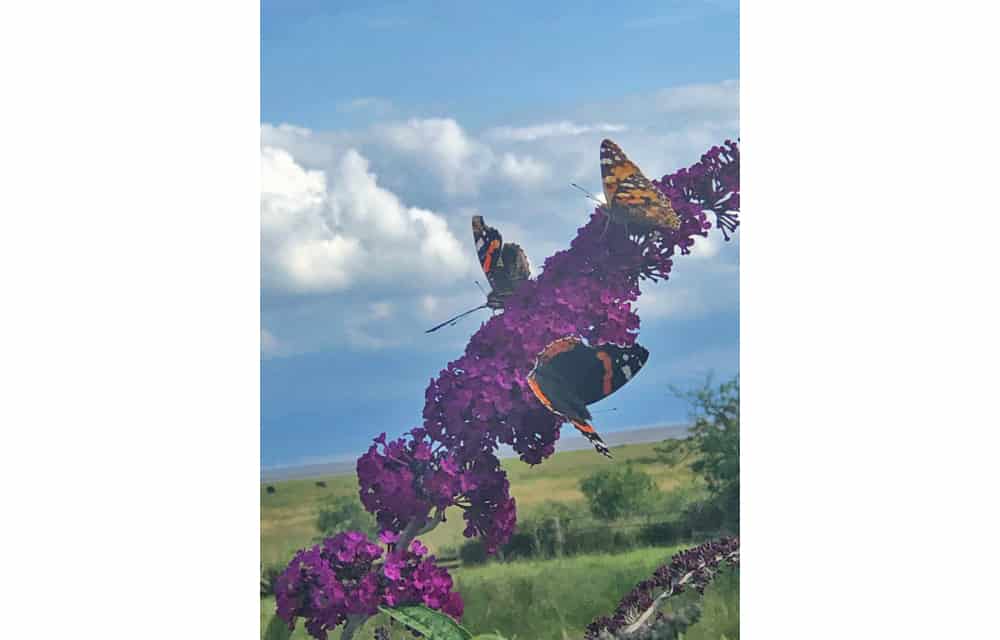
Thanks to Dougie Aitken who sent us this beautiful photo of butterflies on the buddleia in his front garden at Hobbit Cottage! He says that they must have had “at least 200 butterflies in the garden yesterday!” Wow!
It has been a bumper year for butterflies in the UK! In fact, it is a phenomenon which occurs once a decade – a painted lady butterfly mass migration – a ‘painted lady summer’!
This article explains that the last mass migration took place in 2008 when 11 million painted lady butterflies came to the UK.
And this article explains what scientists have recently discovered about the return journey to Africa… Take a moment to imagine – these wee butterflies flying all the way to Caerlaverock from Africa! And back again…
You can take part in the annual Big Butterfly Count – countings count until until the 11th August – which aims to record species and numbers of each seen to research trends in numbers. A productive summer holiday activity?
You can help to welcome butterflies in several ways at home:
-
Leave caterpillars
Pesticides don’t discriminate – they don’t just kills caterpillars, and butterflies, they kills bees and ladybirds as well as many other beneficial pollinating insects. This affects birds, other invertebrates and every other creature up the food chain.
Fewer caterpillars means fewer butterflies later in the year!
You can consider providing ‘sacrificial plants’ for them instead (e.g. nasturtiums as an alternative to your prize-winning cabbage)
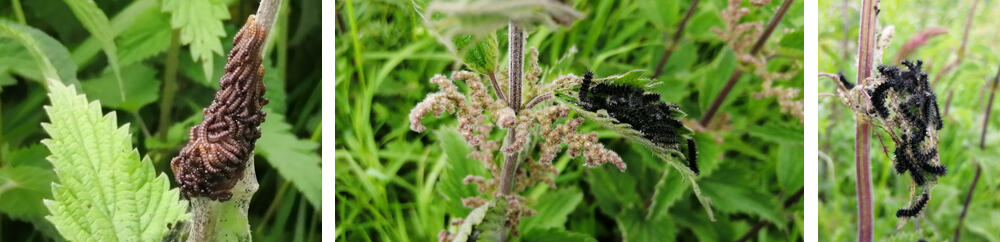
Peacock butterfly caterpillars emerging on the nettles near Glencaple
We are very lucky to have some organic farming around Caerlaverock, allowing for beneficial insects, and with more diverse planting and wild hedgerows which the butterflies love.
-
Let wild-flowers grow
Many plants that are seen as ‘weeds’ are in fact vital for a caterpillar’s (therefore butterflies’) survival…
A few examples: birds foot trefoil, rock rose and dog violet as well as lady’s smock for orange tip and green-veined white; nettles – the main food source for comma, tortoiseshell and peacock; ragwort (which isn’t so good for livestock in dried hay [see this fact based article for more]) is the only plant cinnabar caterpillars eat. It is a moth, but we’ll let it in as they’re not generally as well-loved, and the caterpillars are stripy – see below!)
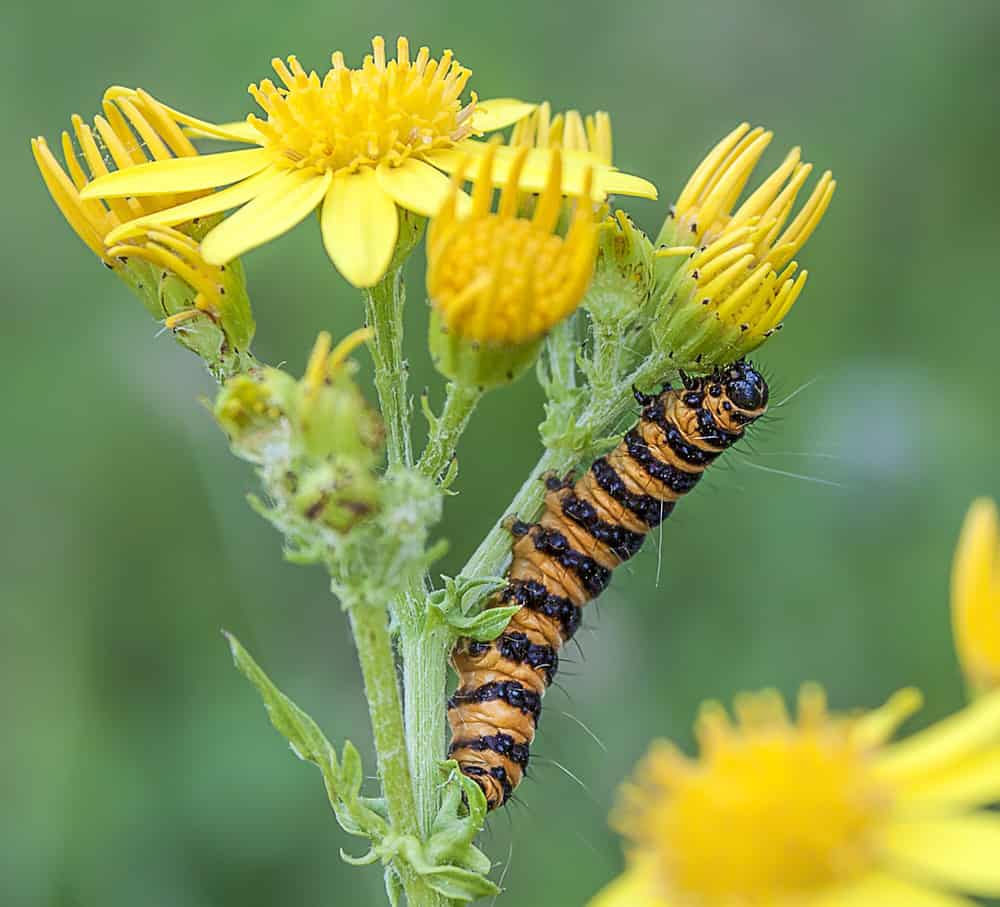
More info on wildflowers for caterpillars here
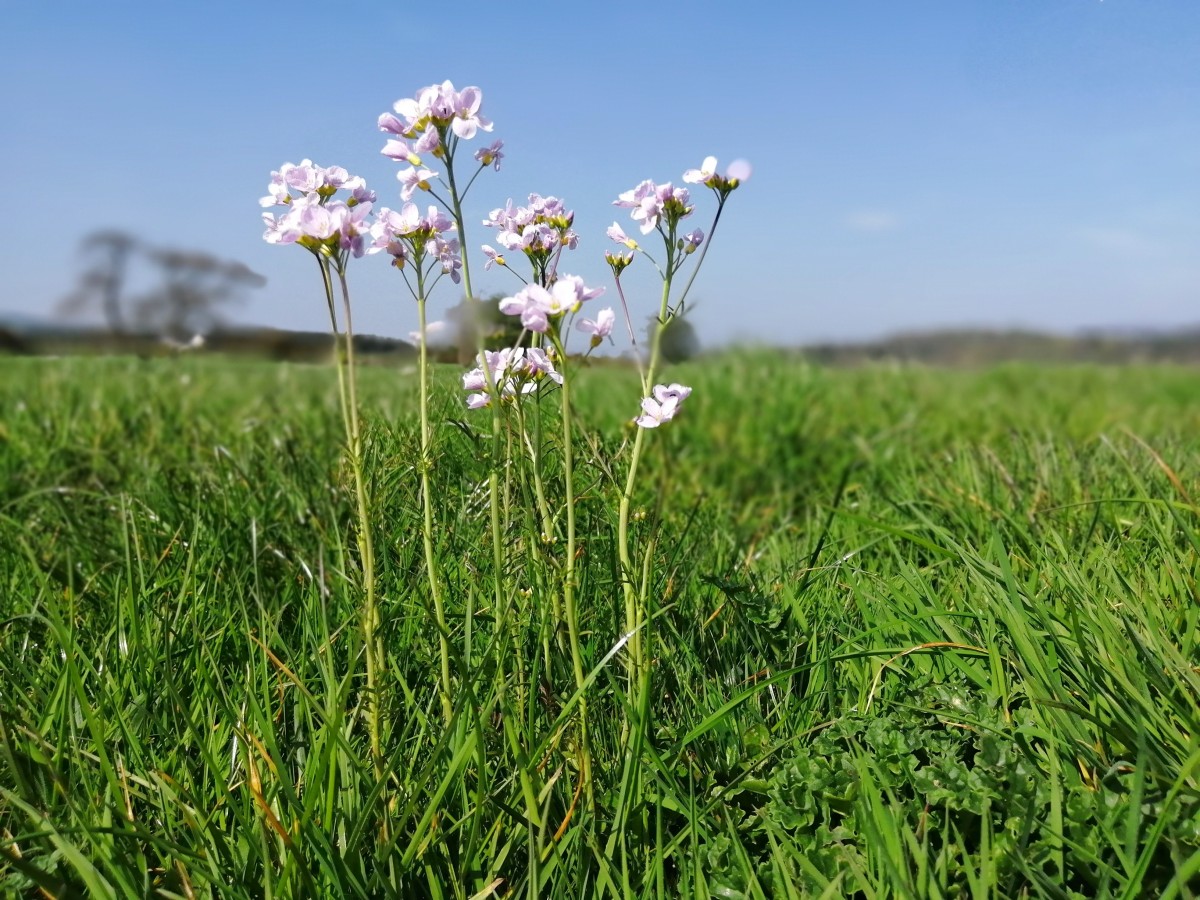
Lady’s Smock/ Cuckoo Flower for orange tip butterflies in spring
-
Plant for butterflies
Grow a variety of plants that butterflies love! From spring as they come out of hibernation, through to autumn, butterflies rely on our gardens as their natural feeding habitat has been ploughed and built on.
If you’ve left an area or some wildflowers for the caterpillars, you deserve to admire the adults!
A few nectar-rich plants include buddleia (as in Dougie’s photo), lavender, perennial wallflower, thistle-type flowers as well as marjoram (oregano).
This site has more info
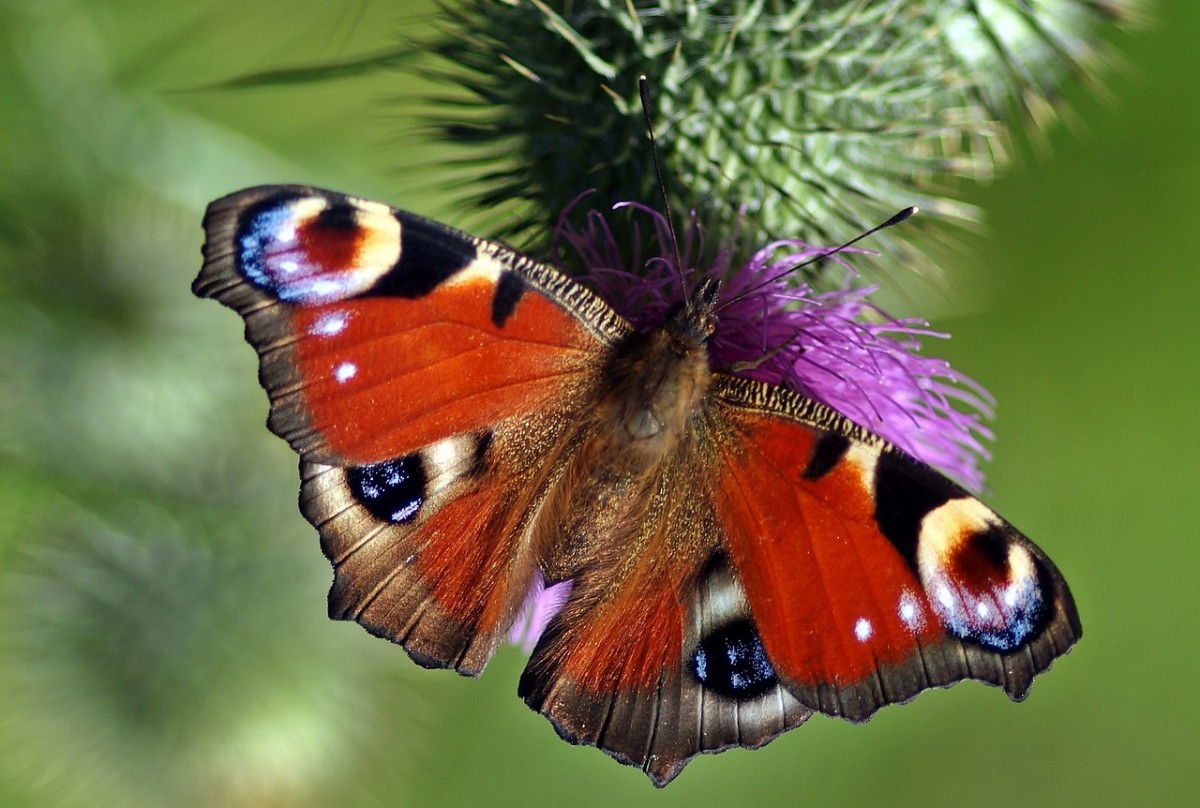
Peacock butterfly on a thistle flower (the seeds of thistle are also great for goldfinches)
Do you think butterflies are brilliant?
If you have any butterfly photos or tips to share, send them to us at caerlaverockcommunity@gmail.com or through our Facebook Page
Dougie’s photo [top of page] shows 2 red admiral and a painted lady butterfly
Leave A Comment