
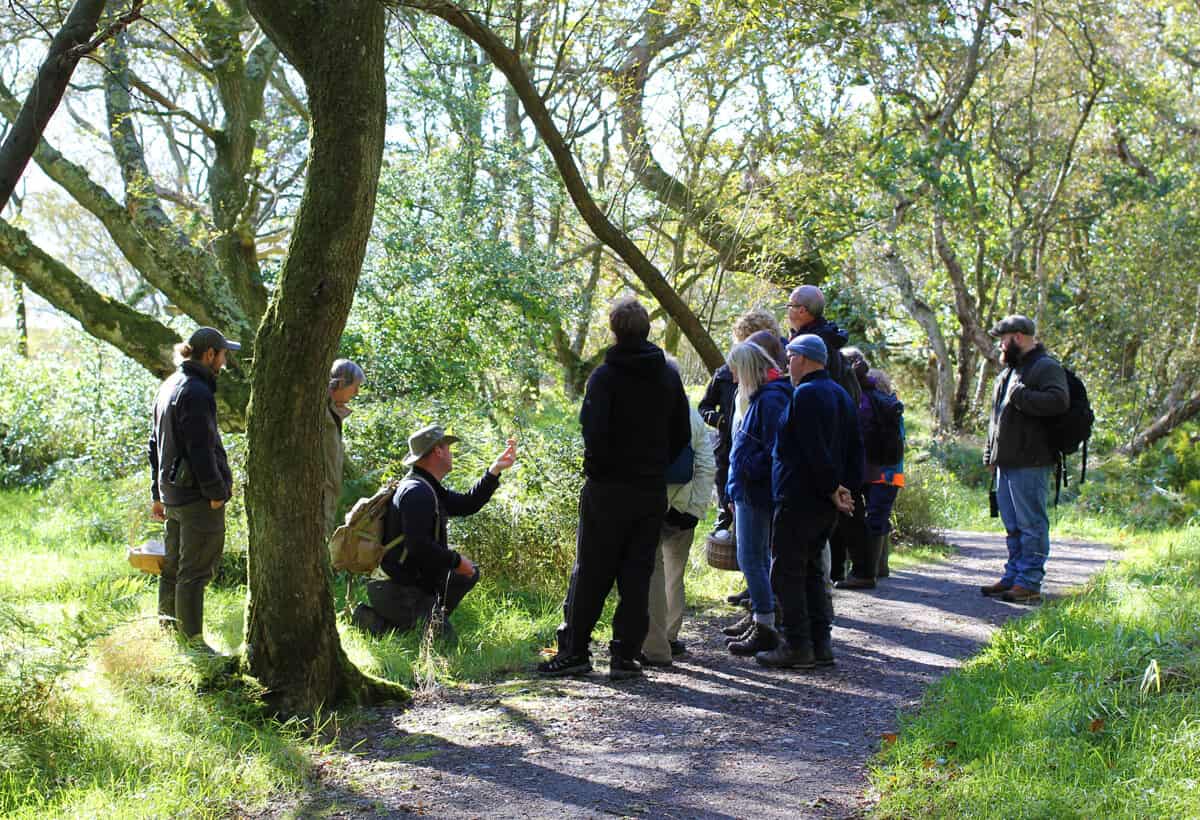
We were fortunate enough to secure a place on 22nd September 2018 at the Autumn Fungi and Wild Food Foraging event with the ebullient and erudite Mark Williams of Galloway Wild Foods, in association with Scottish Natural Heritage, who generously subsidised the event.
A highly enjoyable and occasionally sunny afternoon was spent at Castle Corner, where we learnt a little about how to identify and prepare edible wild mushrooms, and plants. As we had been to an earlier foraging event in Springtime (seasonally sans-mushrooms), we were excited to find out specifically about the fungi.
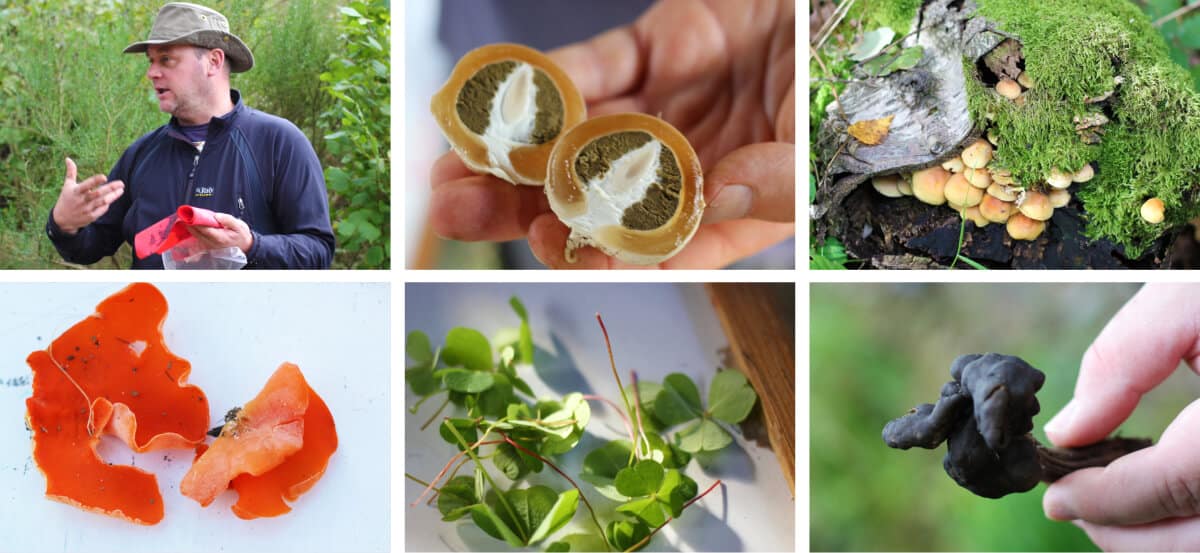
There are a lot more photos in this post if you scroll down, highlights were the Witches Eggs, and the amazing fruit leather Mark brought along. Oh, and can you guess which one was the Orange Peel Fungus?
When we say learning a little, this is because the fungi family is a complex one, and some specimens can only be fully identified by microscope. Even people with a vast knowledge of the field may only be able to identify 70% of the mushrooms they find on the spot. Interestingly, mushroom identification is only partially made by sight – knowing where they were found is highly helpful – near or on certain trees can narrow down the search.
And smell, texture and behaviour too when cut – one we found smelled like coconut, and others had brittle gills or exuded milky drops. All these indicators put together can help find out exactly what we had discovered. There is no easy single solution, some rather challenging to work out.
There is also a certain amount of fear of mushrooms (Mycophobia!) in the UK, Mark informed us, which is rather misplaced as with this careful identification, there are many tasty mushrooms just out there for the picking. On the continent, people there are much more likely to forage for fungi, with very prized types such as the mighty Ceps / Porcini – which are even better in dried form.
A group of about 20 of us introduced ourselves – some complete novices to some who wanted to brush up their knowledge and learn more. We set off, and within the first few yards had found mushrooms almost at every step. After a good couple of hours foraging, we returned to the car park and Mark prepared some delicious morsels – Wild Garlic pesto (you’d never have known it had been frozen since Spring), and a 5 mushroom savoury dish full of tantalising flavours. (We had a second helping, but forgot to take note of exactly which mushrooms were in it in the scramble for more.)
We took some photos and notes, but please don’t take any of our information as gospel – if you are interesting in adding wild fungi to your culinary repertoire a good field guide and a grounding in mushroom identification is highly recommended. (Like going to a future foraging event!)
Watch out for more events coming up on both the NNR Scotland website and on Galloway Wild Foods… so without further ado here are our photos and fairly random notes! Whether some of these were edible or not, we can’t actually remember – although have noted where some definitely were and weren’t!
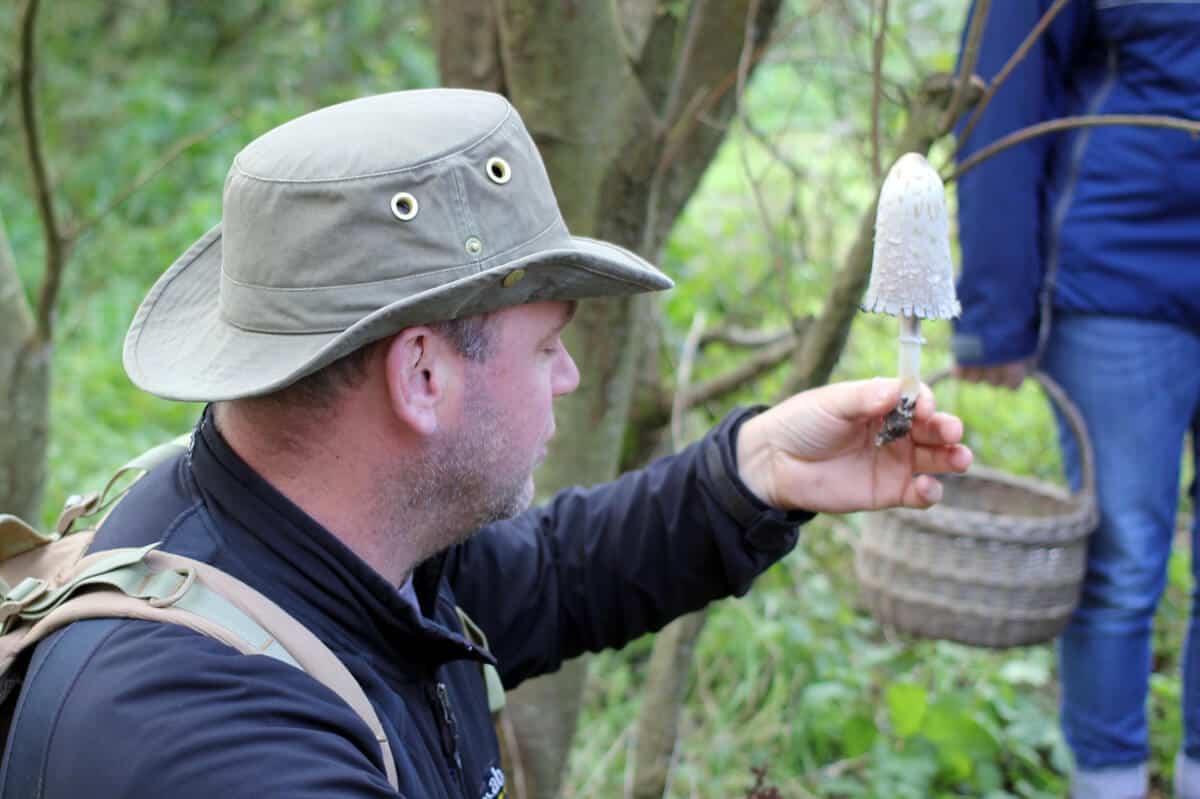
Shaggy Ink Cap
Only a few steps had been taken, and we discovered a Shaggy Ink Cap. Soon we found out why it was named, as black ink started dripping all over Mark’s hands.
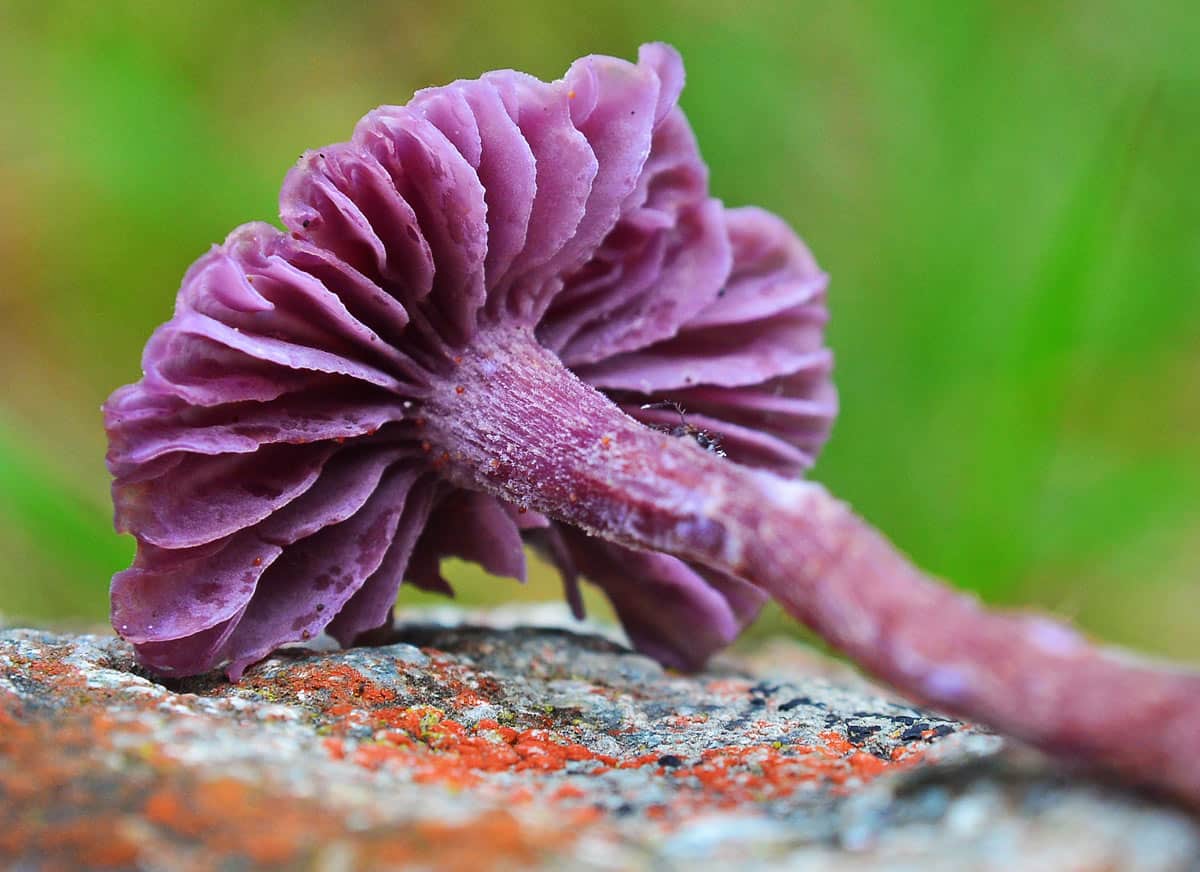
Amethyst Deceiver
The slightly worryingly named Amethyst Deceiver was a beautiful shade of purple, and was edible! Into the basket it went.
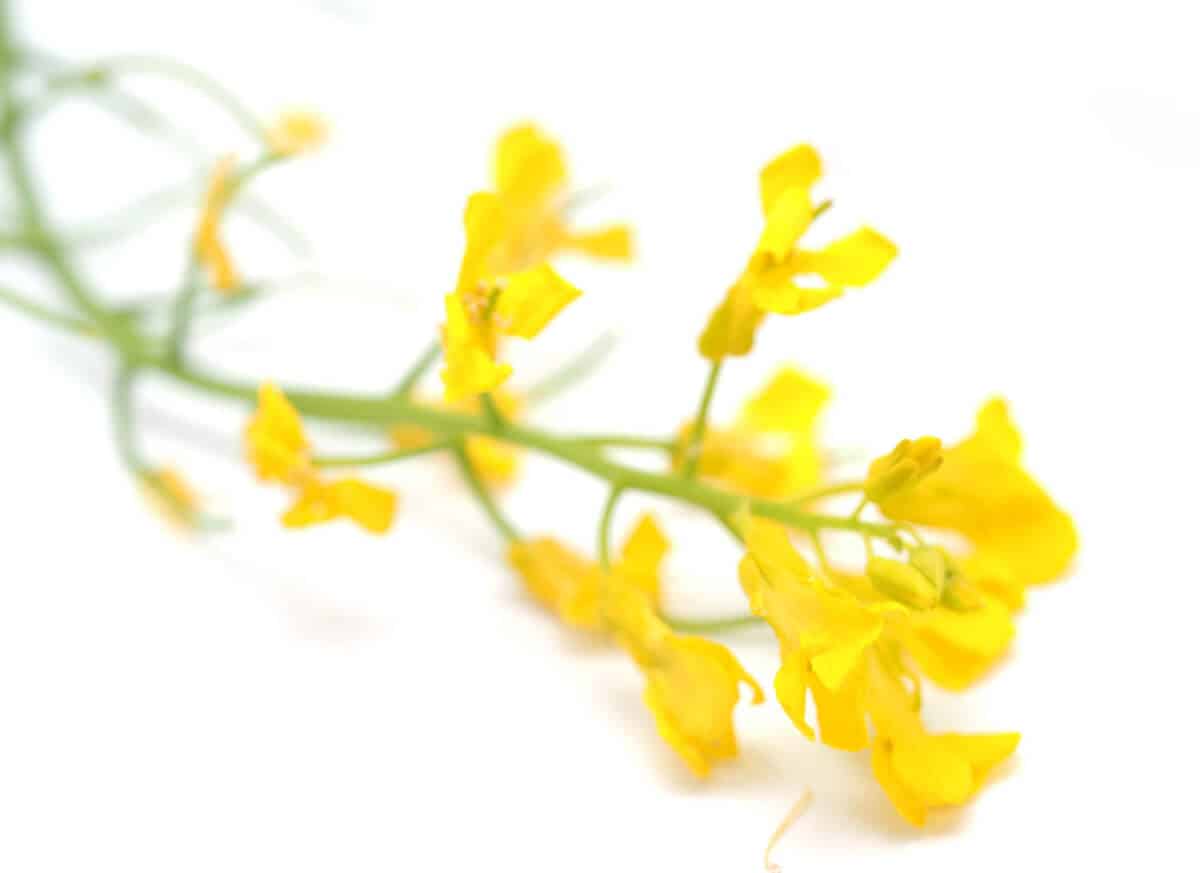
Sea Radish
We had heard of the Sea Radish before, and had eaten its peppery flowers in salads. The leaves were incredibly strong tasting though.
We also knew that Nettles are edible and very good for you – having made many soups and curries with them, but the seeds themselves at this time of year were nutty and nutritious. Apparently eating many teaspoonfuls of these seeds will raise testosterone levels – and rather stimulating Mark assured us. We had only a few just in case we got a bit too excited, as it was already a lot of fun.
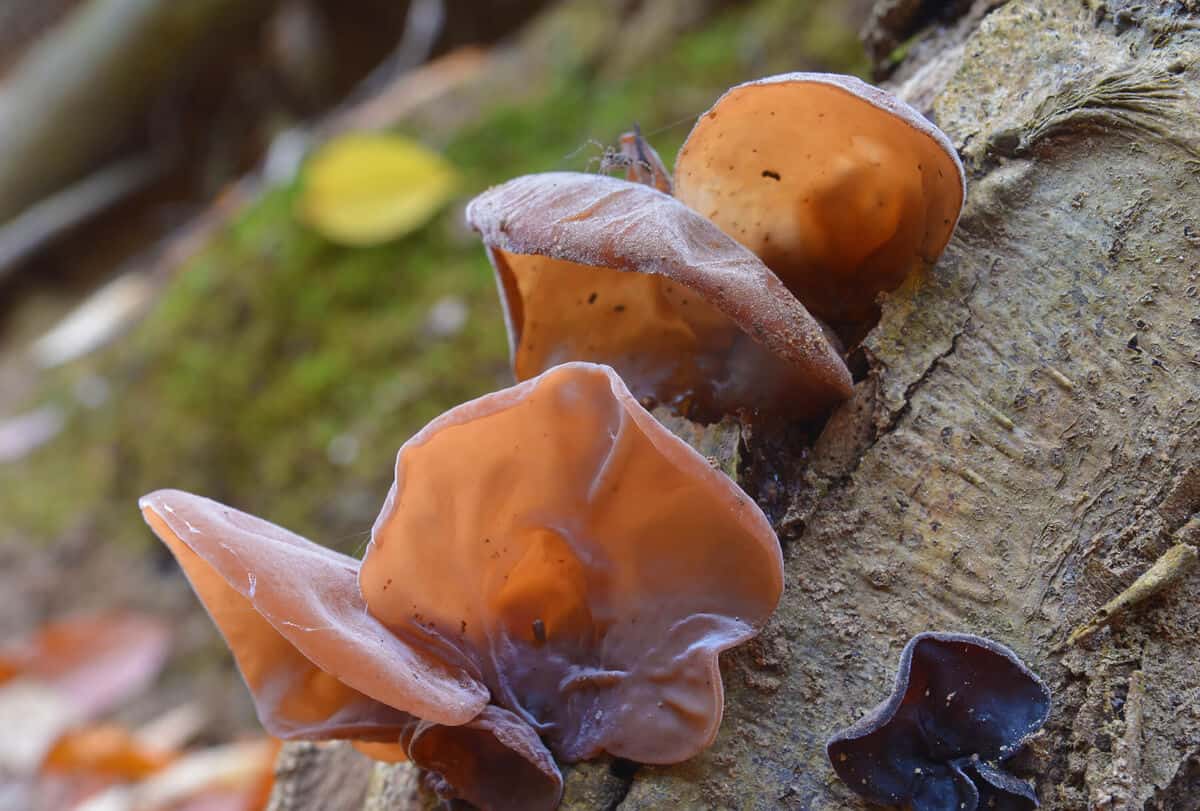
Jelly Ear
The Jelly Ear fungus is really interestingly textured, velvety with a crunchy jelly when eaten. One of the party compared it to a Cola Bottle sweetie – accurate apart from the taste!
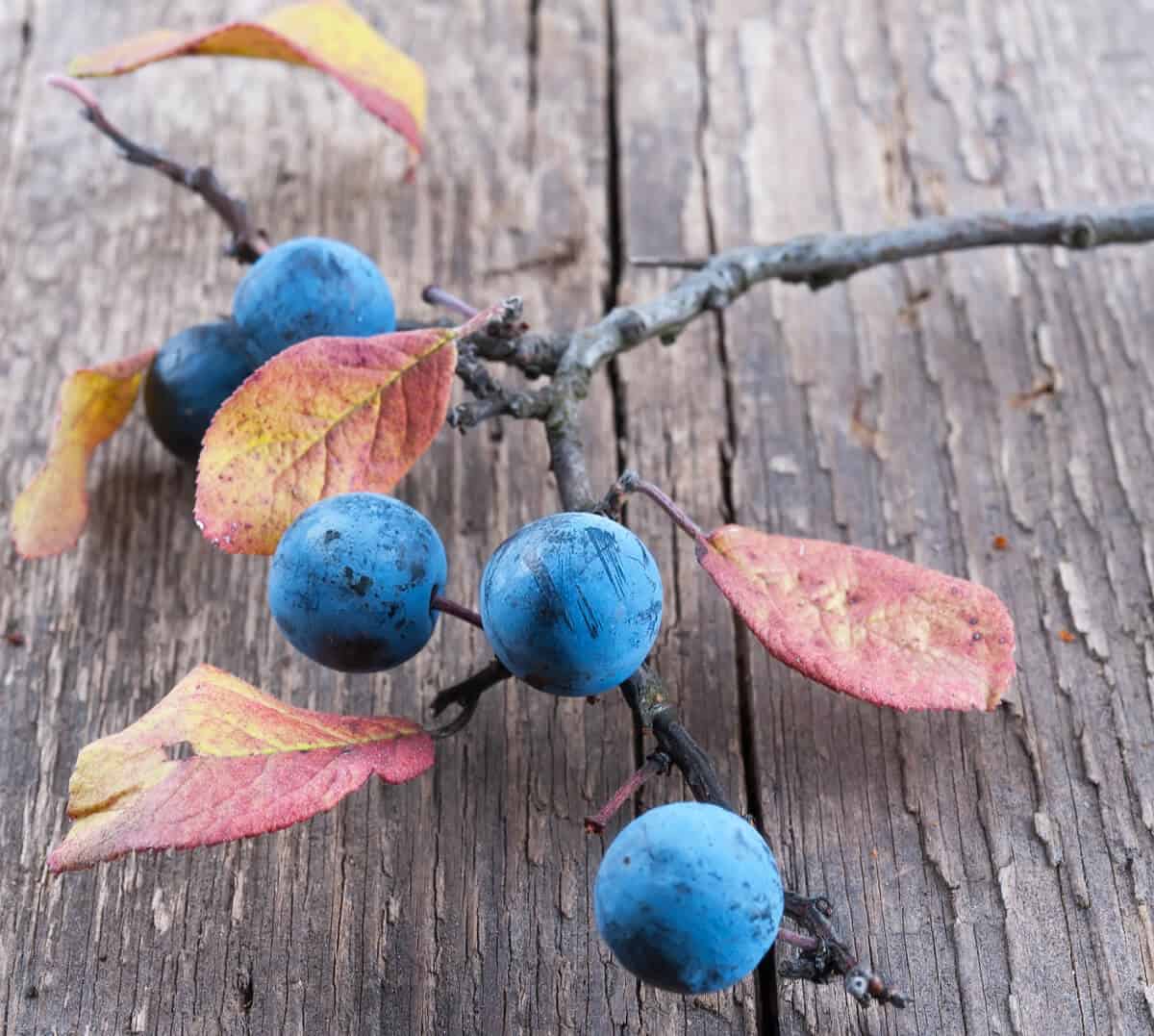
Sloes
There are still a few Sloes about on Blackthorn, which is incidentally great for making walking sticks. Sloes are extremely sour mini plums – and fabulous for making Sloe gin, whisky or vodka. The flowers can be used for an almondy flavour spirit infusion earlier in the year, and even combined with the fruit versions for a complex flavour.
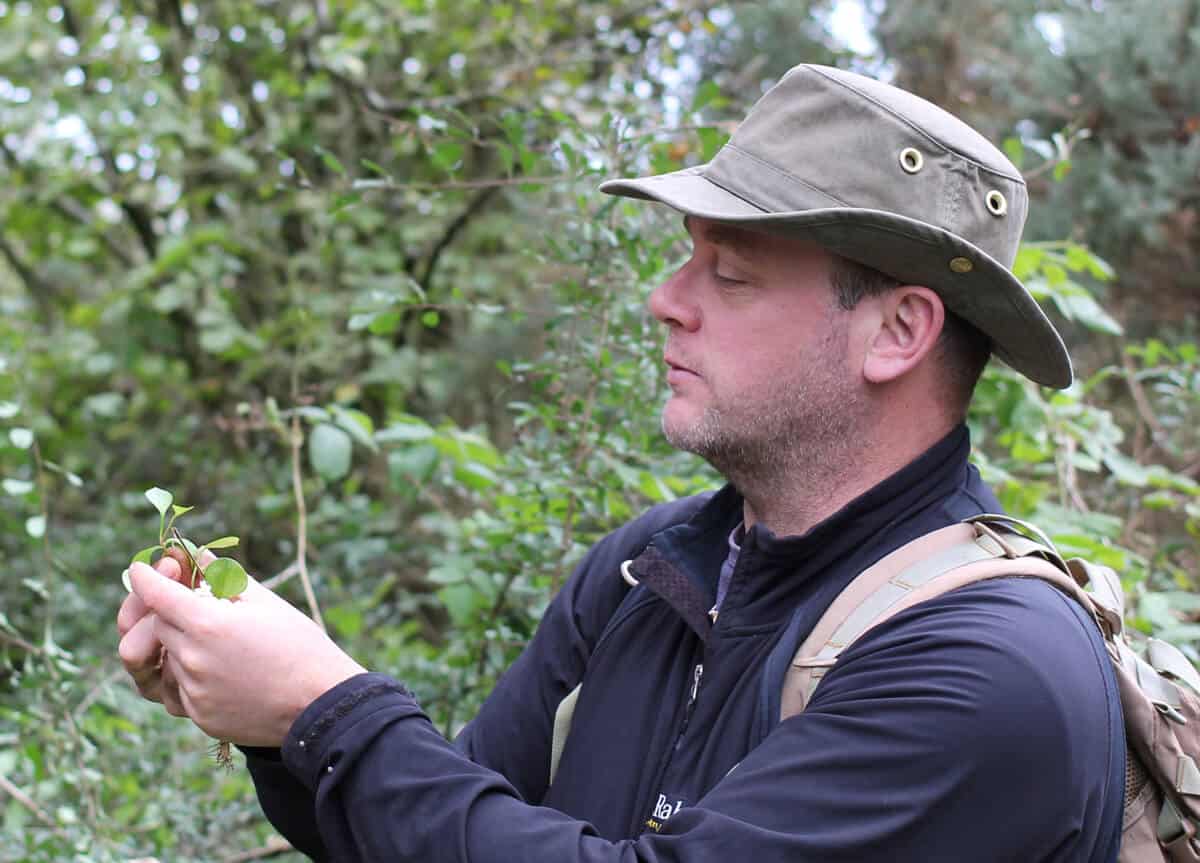
Pink Purslane, shall I compare thee to a summer’s day, the darling buds of… September.
Pink Purslane is available very late into the year and super in salads. So is Wood Sorrel, almost lemony and very good steeped in your water bottle.
We also discovered the very common Dog Rose Rosehips, wait and pick them til they are very soft and almost mushy, to make syrupy concoctions and add to jams. Does anybody remember putting the itchicoos down people’s shirts?
Mark handed round some some pre-prepared fruit leather, made by drying (in a very cool oven, or a dehydrator) fruits, much better than sweets! His was made with Crab Apples, Brambles, Sloes and Rosehips.
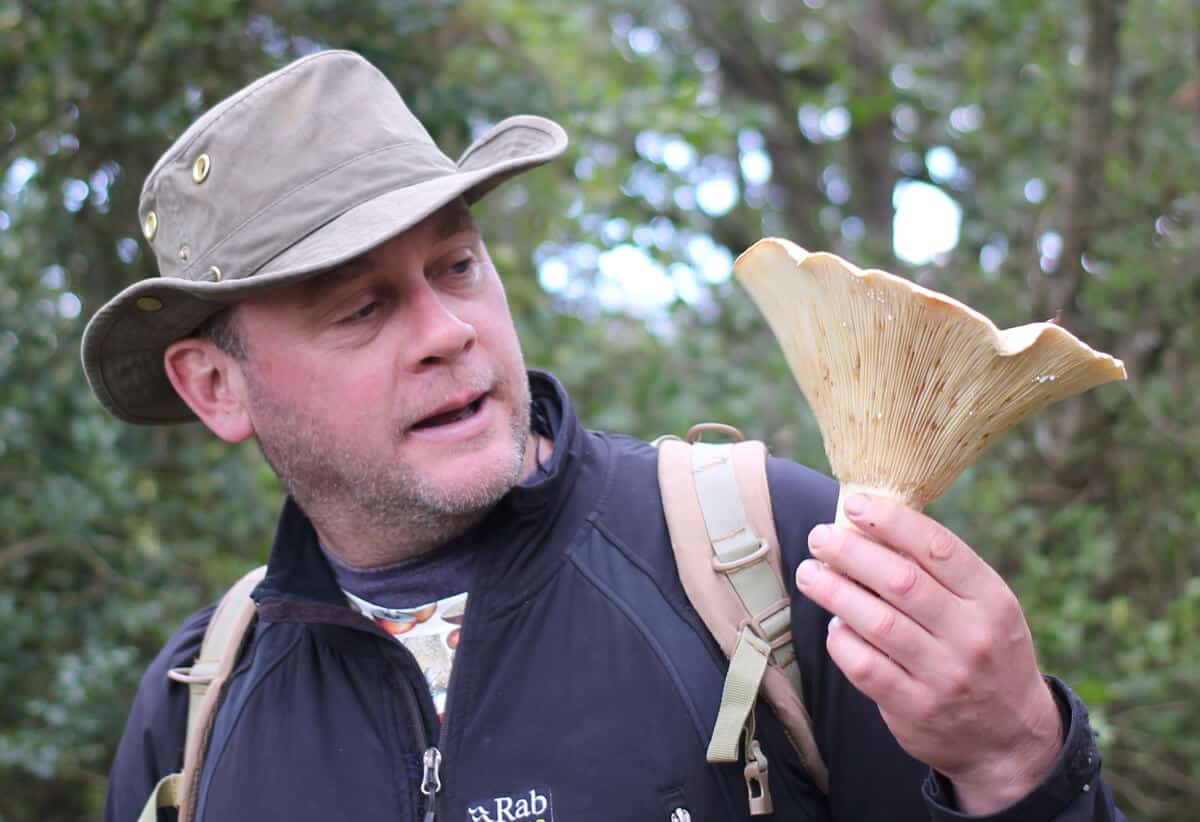
Fleecy Milkcap. “Yup, I’m going to. I’ll lick it.” He licked it. 30 seconds later he wished he hadn’t.
Then we found a huge mushroom under an Oak. Identifying mushrooms is helped by knowing where you find them, as they can co exist with certain species of trees – helpful if you know your trees too! This mushroom had a fleecy, leathery feel, and when cut started dripping white milk – giving it the name the Fleecy Milkcap. Whilst not poisonous, the taste was very strong – Mark took one for the team and tasted it.
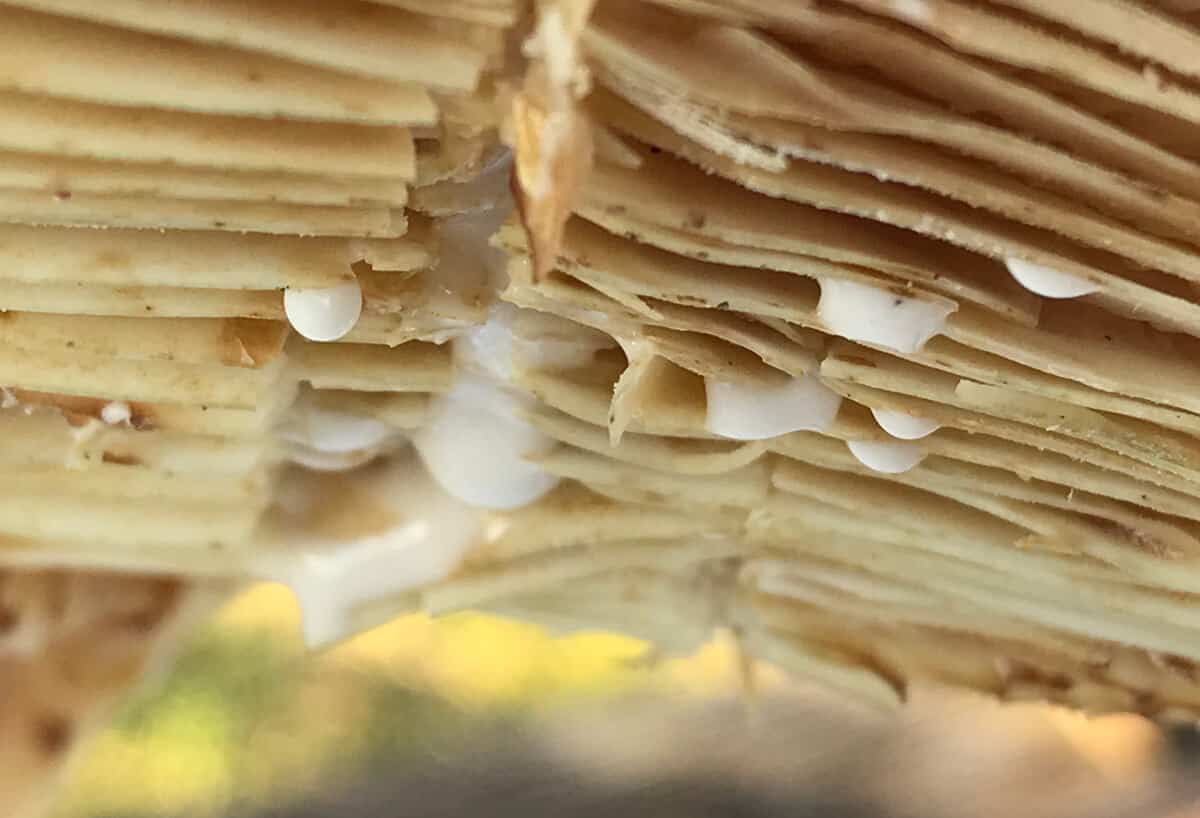
Fleecy Milkcap dripping ‘milk’. Disgusting, but not deadly milk.
We also had a basket of mushrooms which Mark had collected elsewhere, and from this he produced a smaller Milkcap. Everyone had a sniff of it, and decided it smelled just like coconut – it’s name being the Coconut Milkcap! There are also many other kinds of Milkcaps which smell of various foods like curry and fenugreek for example.
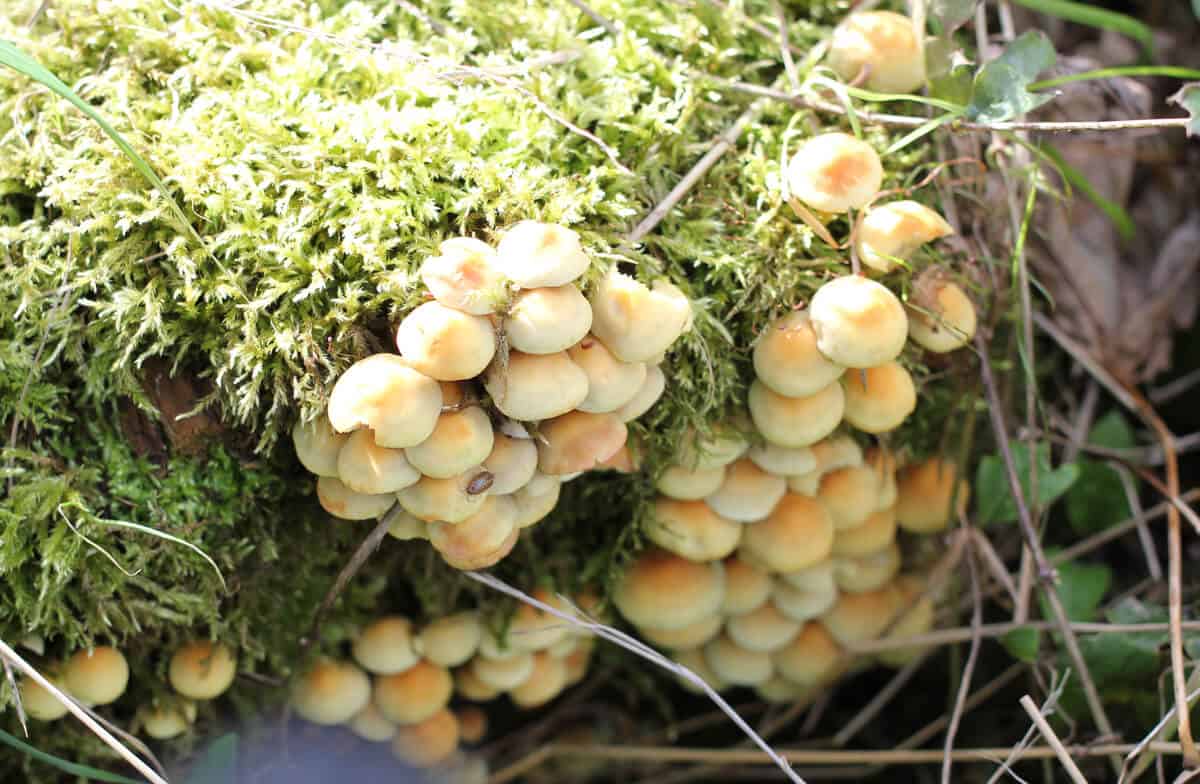
Sulphur Tuft. Not to be eaten!
It was here that Mark told us that looking at the spores are a large method of helping classification, showing us a Sulphur Tuft – which appears on old stumps, in groups – with yellow gills, and chocolate coloured spores. These overlap each other, and its easy to see the spores marked on other mushrooms. Using white paper, a spore print can be taken, and with 7 main colours of spores, helps narrow down and eliminate mushrooms off the list when working out what they are.
Smell is very important too – we found a Deadly Fibrecap – small, innocent looking, and smells reasonably ok – but not edible whatsoever! (Clue is in the name with this one.) Smell in this case can help with identification, but not as an indicator of safety.
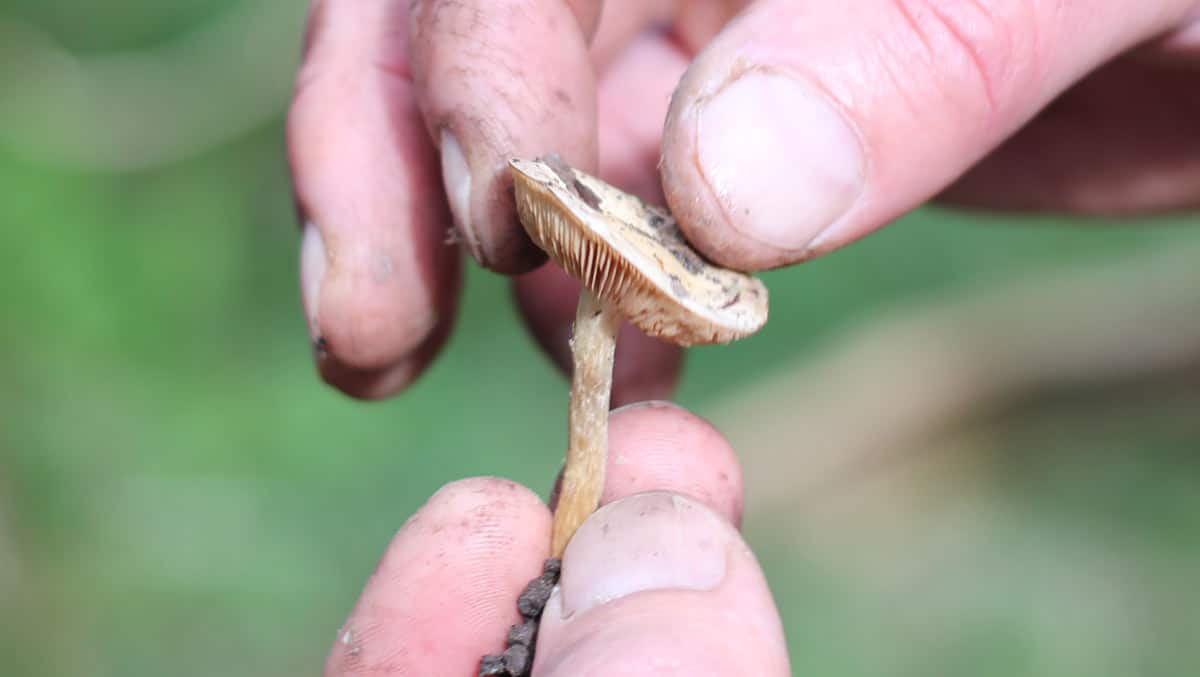
Pretty sure this pic is of the Deadly Fibrecap. Don’t eat it either!
A very common mushroom that everybody seems to know, is the Puff Ball – some of which can be enormous! We didn’t see any, but we did find some Earth Balls which look similar. These are listed as not edible. These kinds of mushrooms have a very cool method of distributing their spores – when raindrops fall on them they shoot their spores out in little puffs!
Since we forgot to take a lot of pictures at this point, here is a board with all the fungal finds of the day, which we identified and marked up, the Earth Ball full of spores is at the bottom right: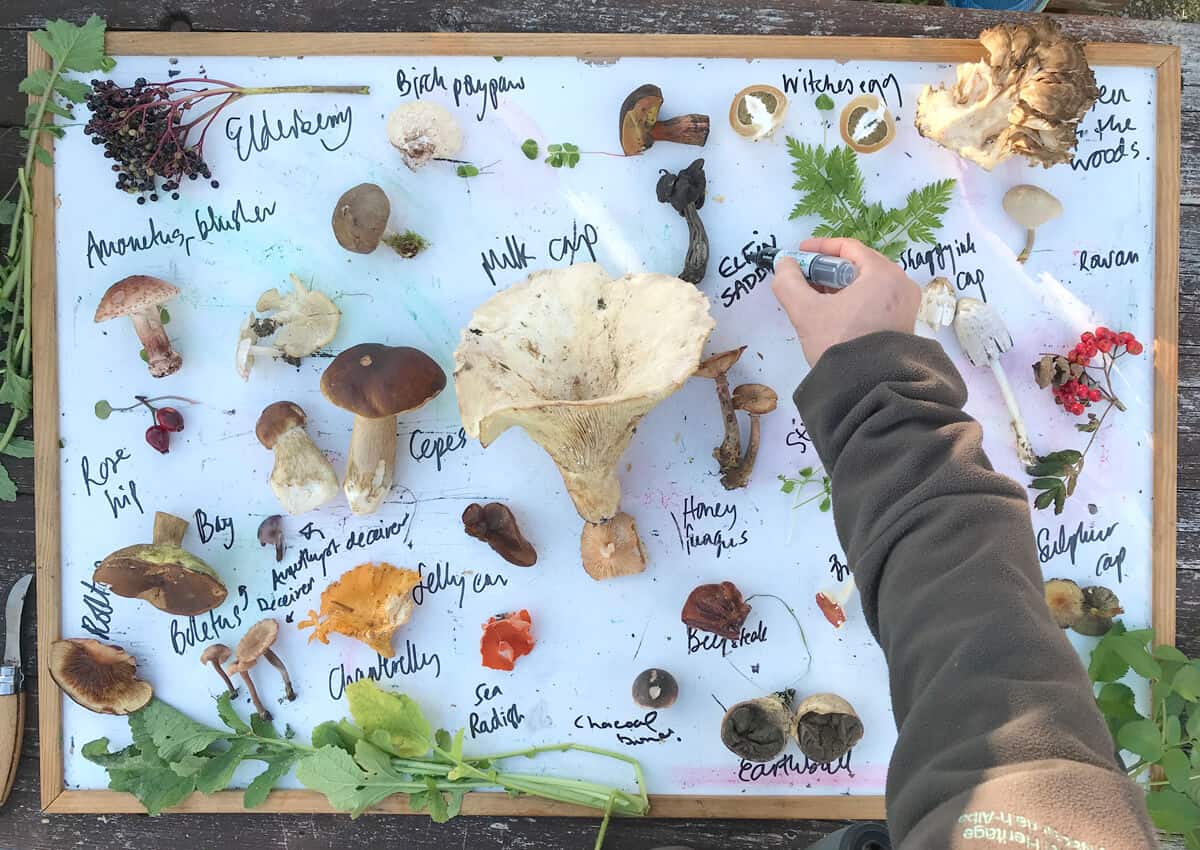
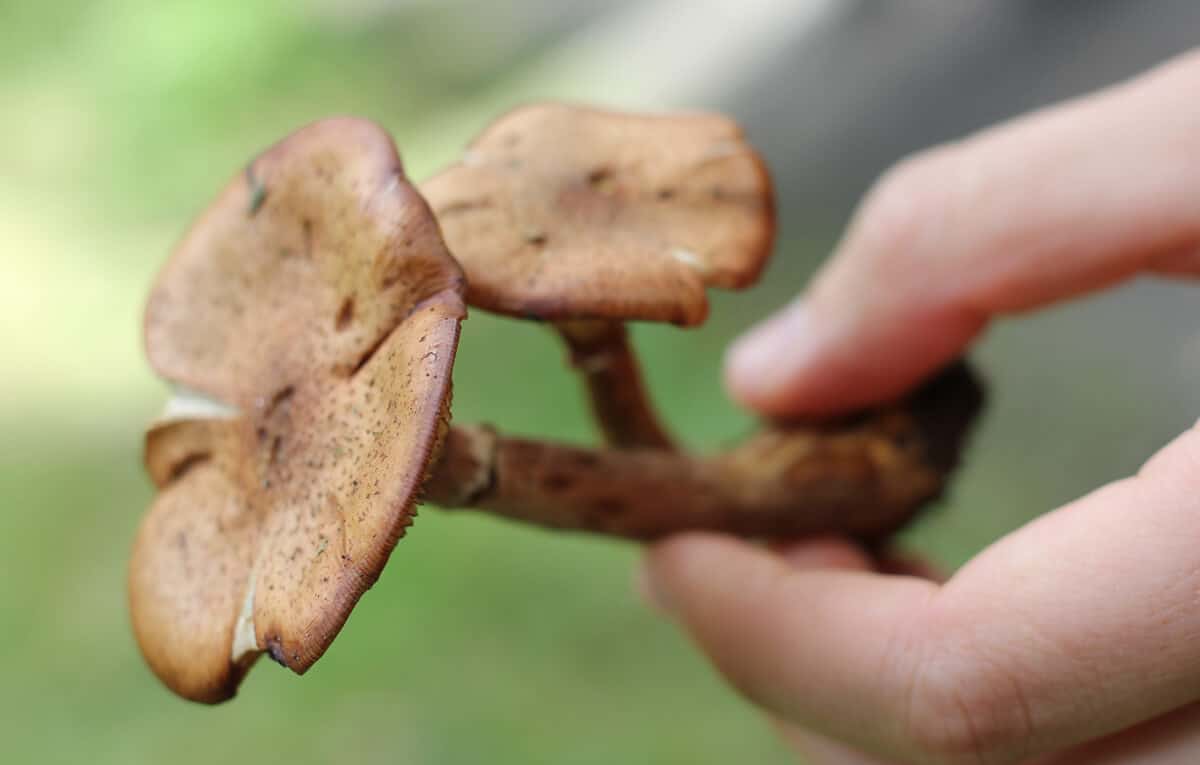
Honey Fungus – sweet in name, but not in nature. Whole swathes of trees can be wiped out by it.
Next we found Honey Fungus – which was edible (but be careful as the appropriately named Funeral Bell is similar in appearance) and is the largest single living organism in the world – a specimen in Oregon covers literally miles. It’s very bad for trees, and kills them, to then use as food, in cycles – going dormant when the trees are growing again. It really is harvesting/farming if you think about it.
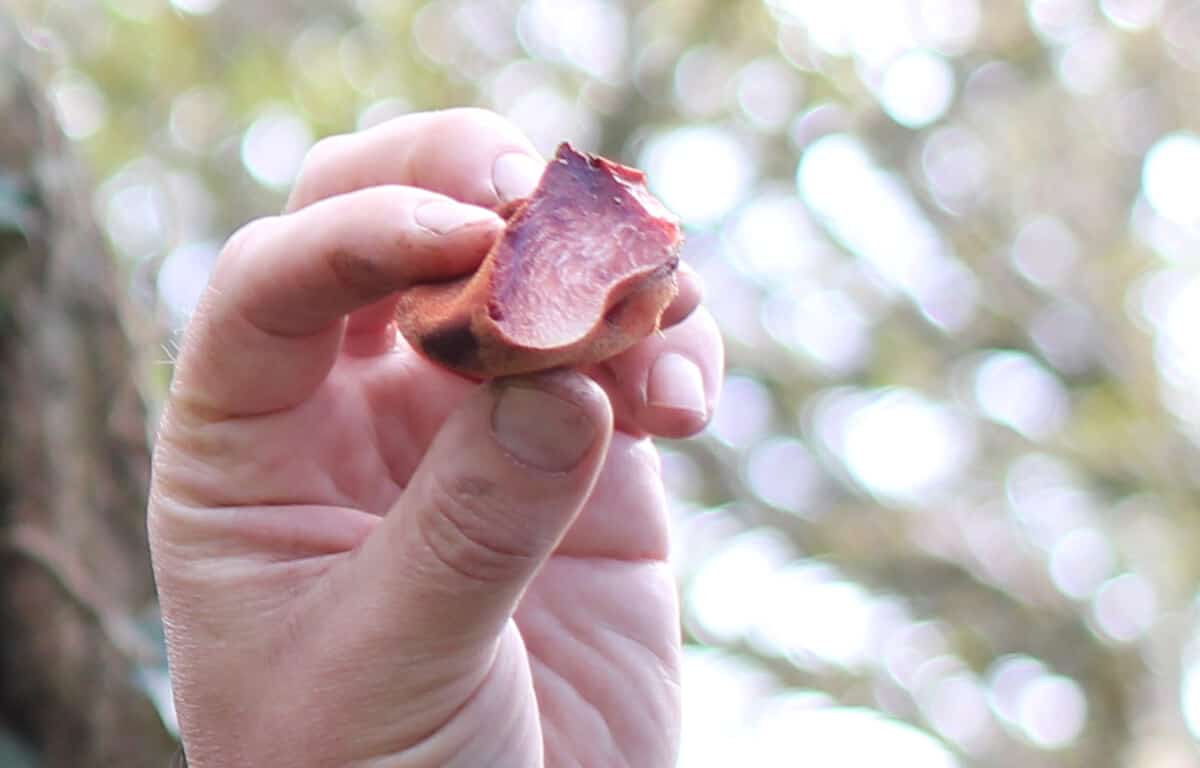
Beefsteak Fungus. Suitable for Vegetarians :)
A very common type of fungus, and easily recognised, are bracket fungus, which grow on sides of trees. This one here is edible, and when cut, looks a bit like a marbled piece of fillet beef – and is called the Beefsteak Fungus. It doesn’t taste like it looks though.
Now, the next one we found was a bit of an upstart – the Phallus Impudicus. Some Victorians, being rather prudish, beat these Common Stinkhorns down by wherever they were found in case young women happened across them and were mortally offended. Personally, we think anybody getting up early in the morning to knock these down has a problem.
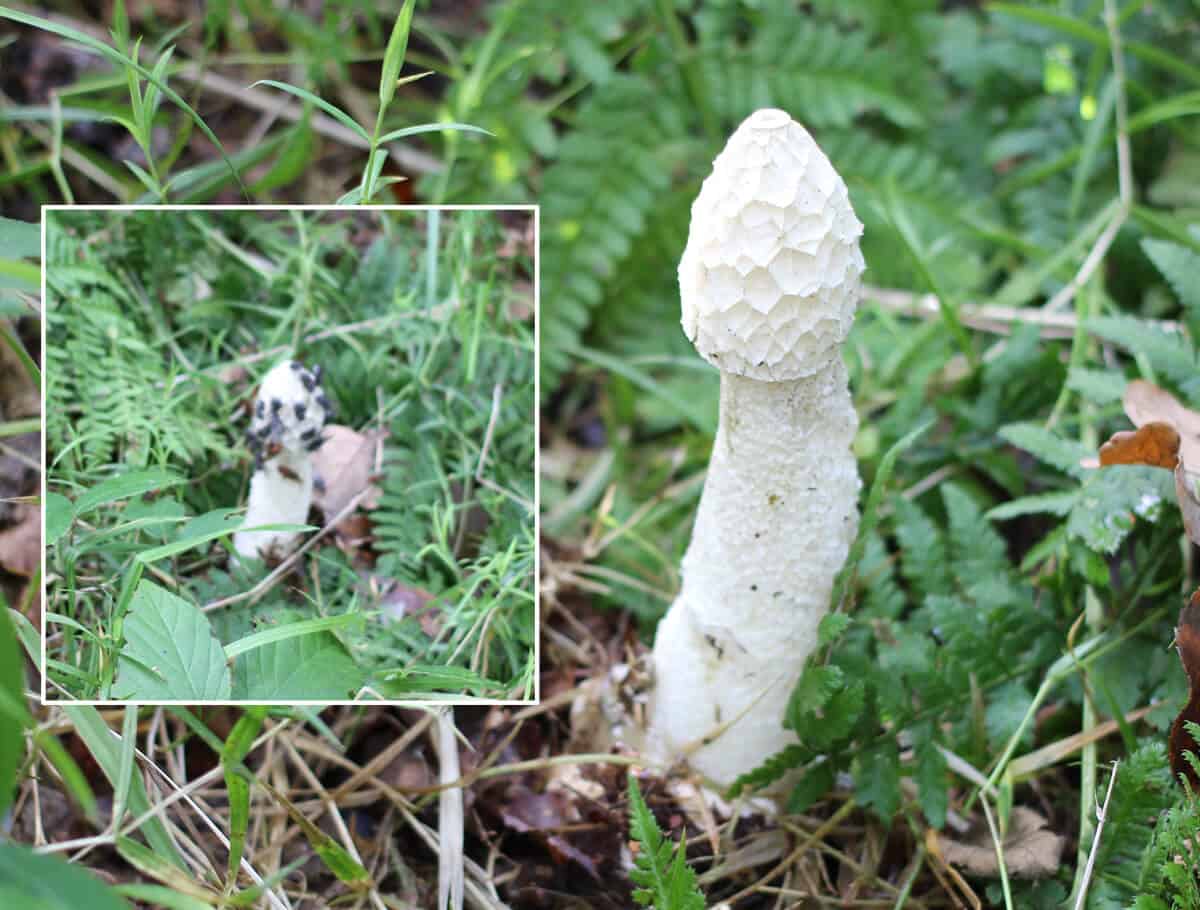
Common Stinkhorns: Sorry for the out of focus flies…
They have an amazing lifecycle, and when we found this mature one, had lost the foul smelling greeny-grey jelly like covering which attracts flies, which then go on to spread the spores around on poo and other places. This one still had a rotten smell and was covered in flies.
One of our party went wandering about for a while and found some Witches Eggs, which are Stinkhorns early in their lifecycle. The centre part is quite edible. They felt a bit like a heavy eyeball, and rather alien.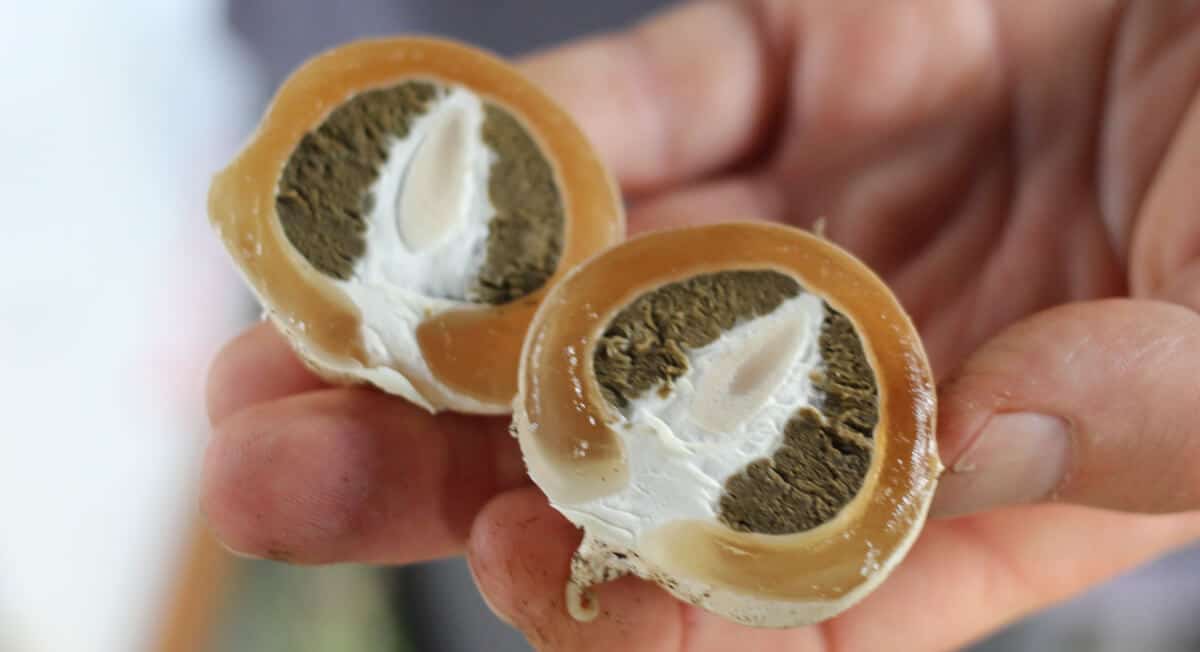
Mark then discovered a white round fungus, very common on Birch. These Polypores have many uses – but not really edible. Very good for first aid, being antimicrobial and antibacterial, and can even be used as a plaster. Otzi the Iceman was found to have some of these in a pouch, and it was thought that he may have used them as a brew kit for a bitter tea or a medicine.
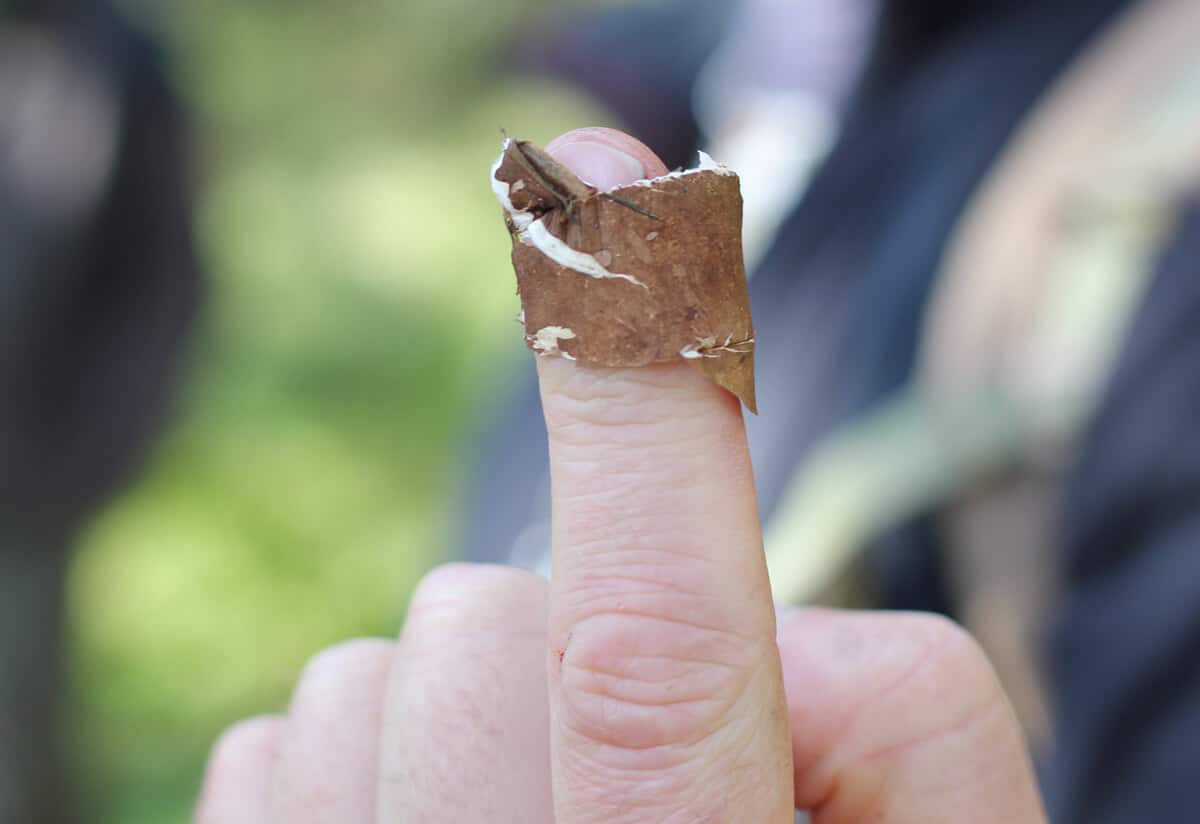
Mark demonstrating a Polypore Plaster. It actually sticks to itself too.
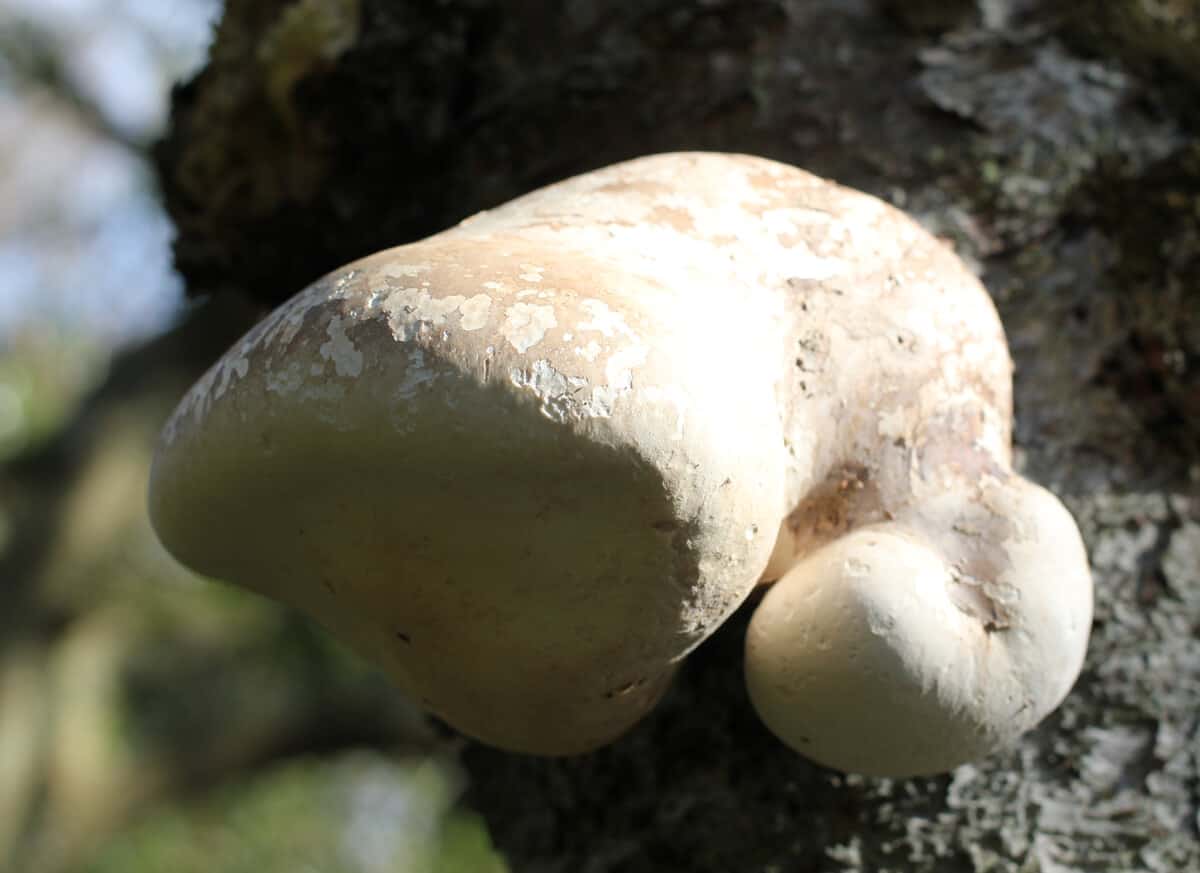
We forgot to take a photo of the smaller Polypore, and are fairly sure this is a large one. Looks a bit like the Elephant Man.
Now for some of the tastiest mushrooms around, some of which are in the boletus family. These have pores, not gills, and its a good idea when picking, to pick deeply, getting the whole mushroom. What the base looks like very much helps identification. We found one next to Birch, with fleecy fibres on the stem and black scale like parts (called squamules – an excellent word!). This turned out to be a Brown Birch Bolete – and edible.
The picture below shows probably the most prized bolete around, the Ceps, or Porcini. Extremely flavoursome, found near Beech, Birch and especially on Sitka Spruce Plantations – a mono-culture not known for its diversity! When dried they taste even better. Note that if you find some of these in a certain spot, they will come up again next year – so make note where found.
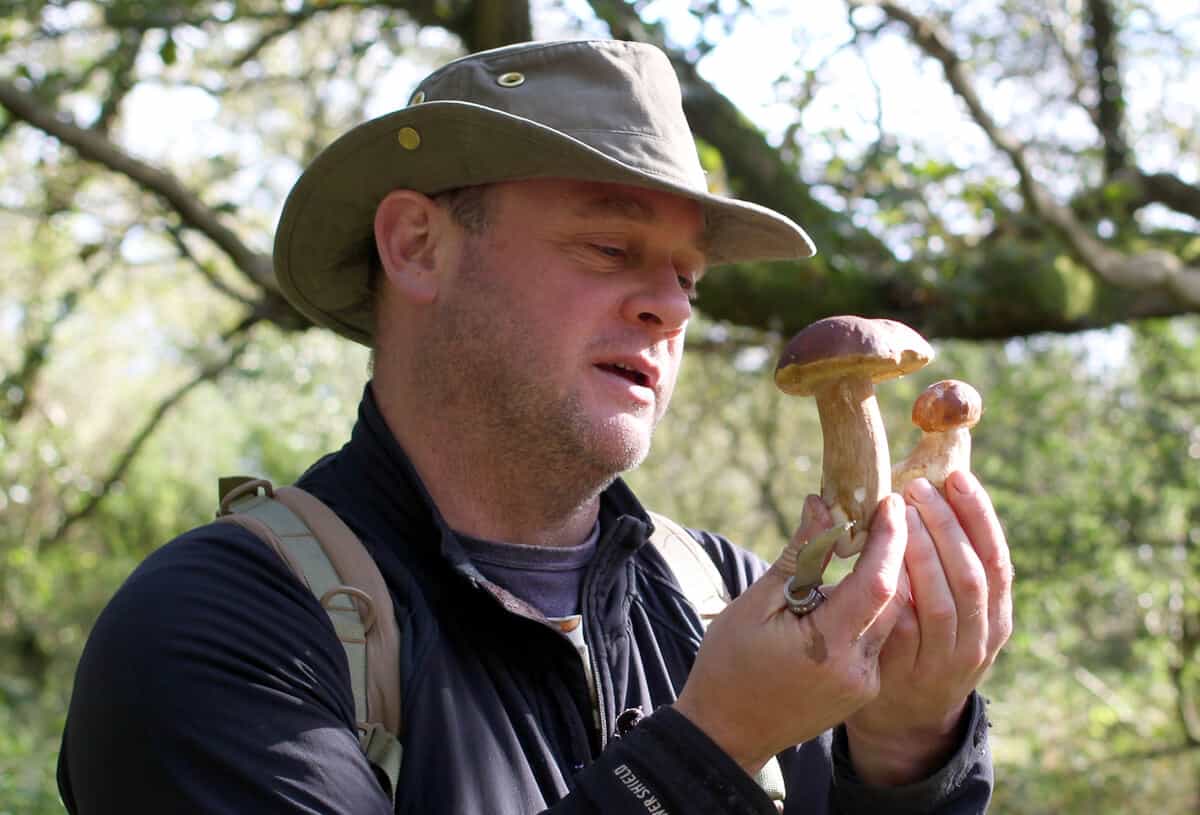
Ceps / Porcini, mature and young examples. These were easy to identify, but because of the lifecycles of fungi, some can look extremely different at various stages.
INTERMISSION
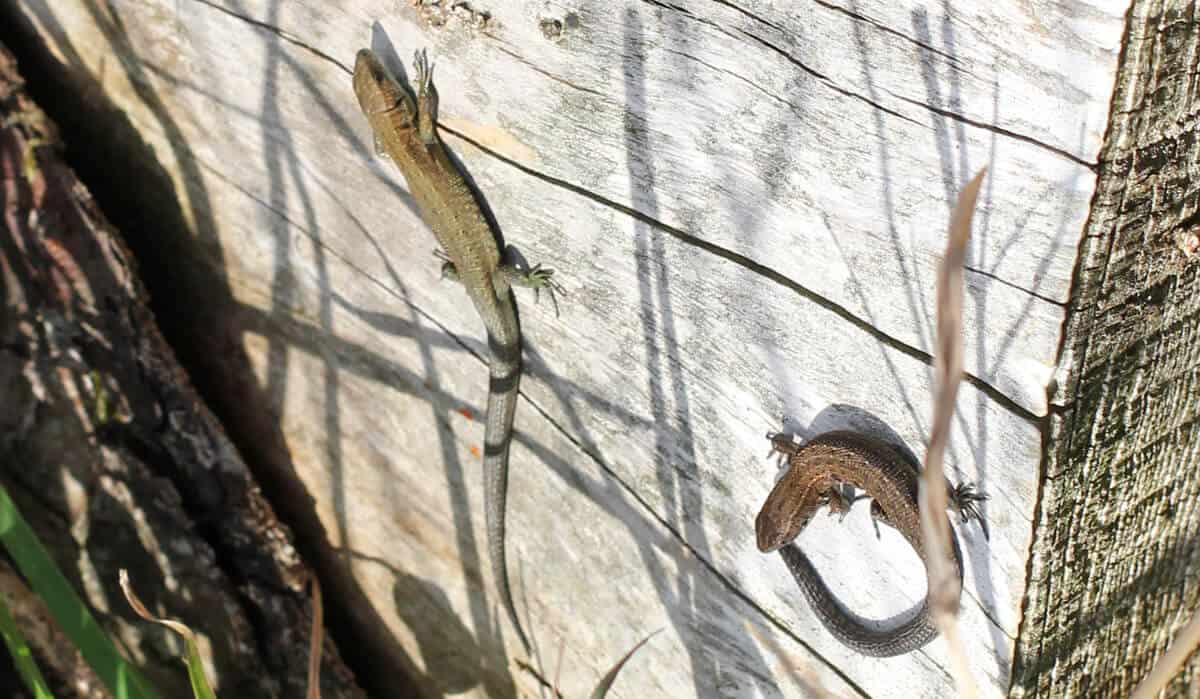
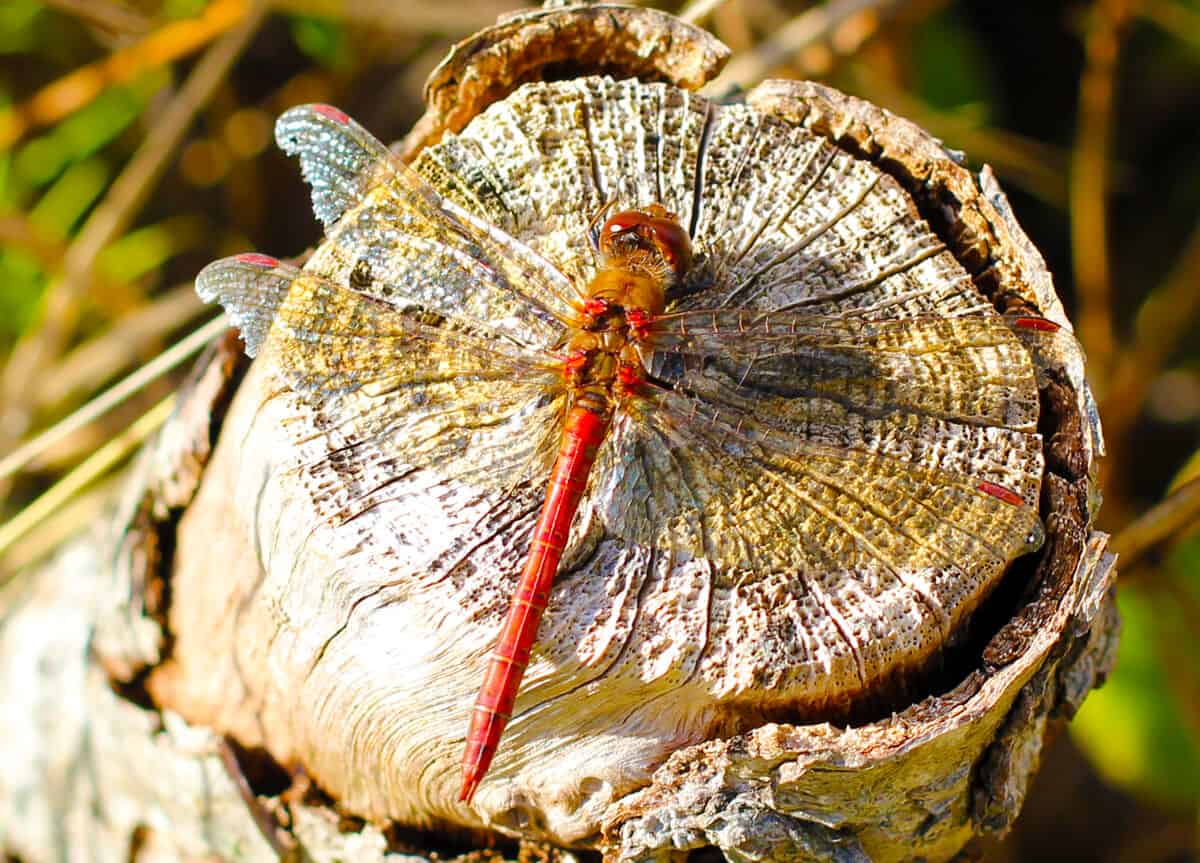
Now, we know these aren’t plants, nor fungi, and don’t recommend you eat them! We couldn’t help snapping a pic of some basking Common Lizards and a Red Darter Dragonfly:
After this we made our way back to the start – and were shown some more pre-collected mushrooms:
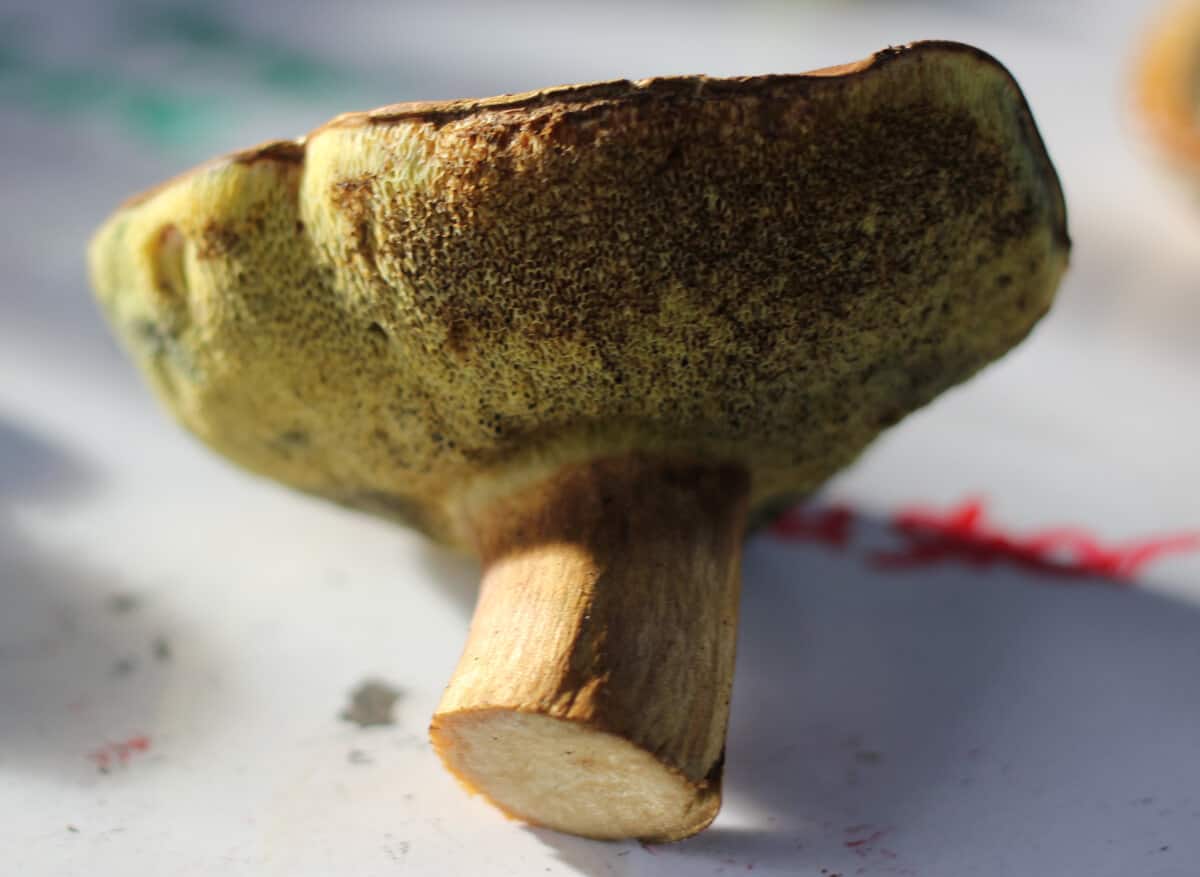
Bay Bolete
The Bay Bolete, with easily bruised pores, turning blueish – like a Cep, and very sought after. Yes it doesn’t LOOK very edible, but it is.The Amanita family contains a lot of inedible mushrooms, but one particular example is edible – the Blusher. Fairly hard to identify compared to its brethren, it has a close relative in the Panthercap, which is certainly not to be eaten and potentially deadly. Let’s leave this one to the experts before noshing on it.
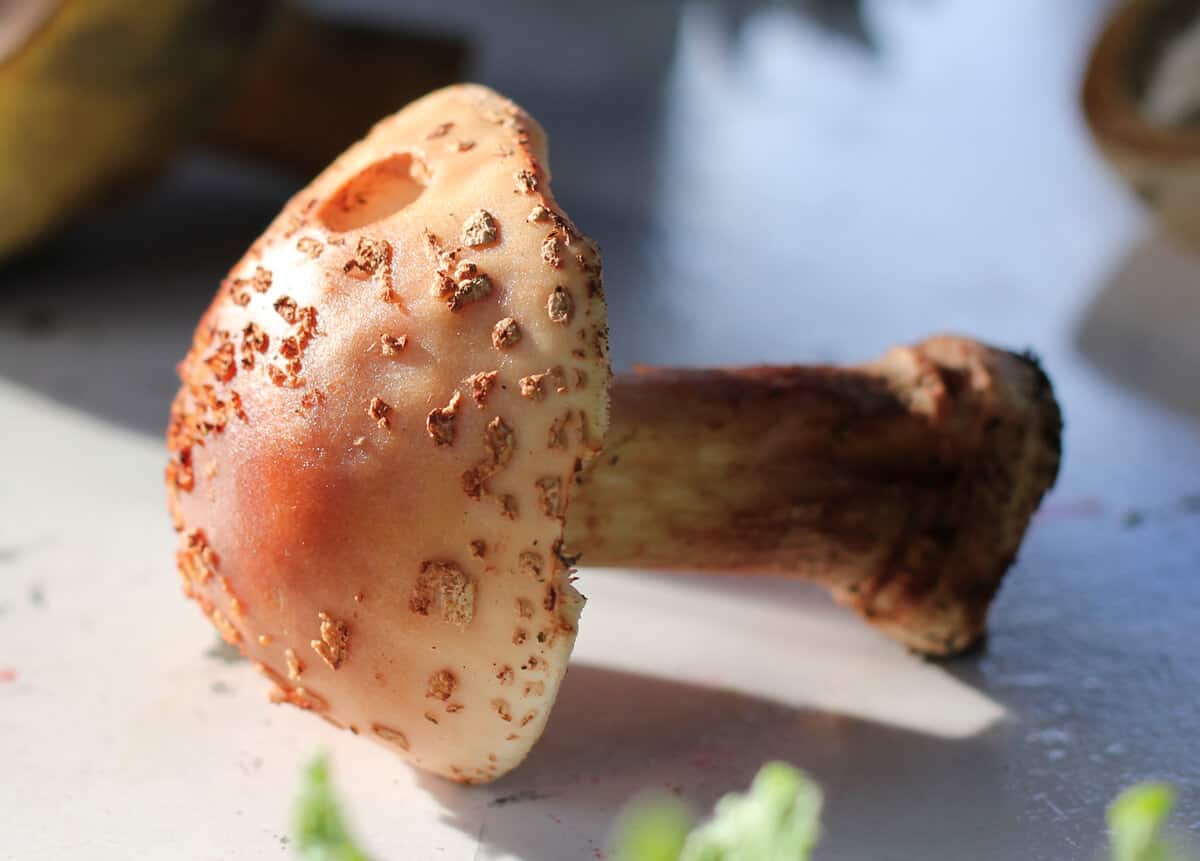
Blusher – pinkish, and not be confused with a similar Panther Cap
A complex mushroom is the Brown Roll Rim, which can be edible, or highly poisonous, depending on your particular response to it. Some people can eat it all their lives, and some people won’t last very long at all. Let’s also not eat this one! The photo below shows the distinctive rolled rim.
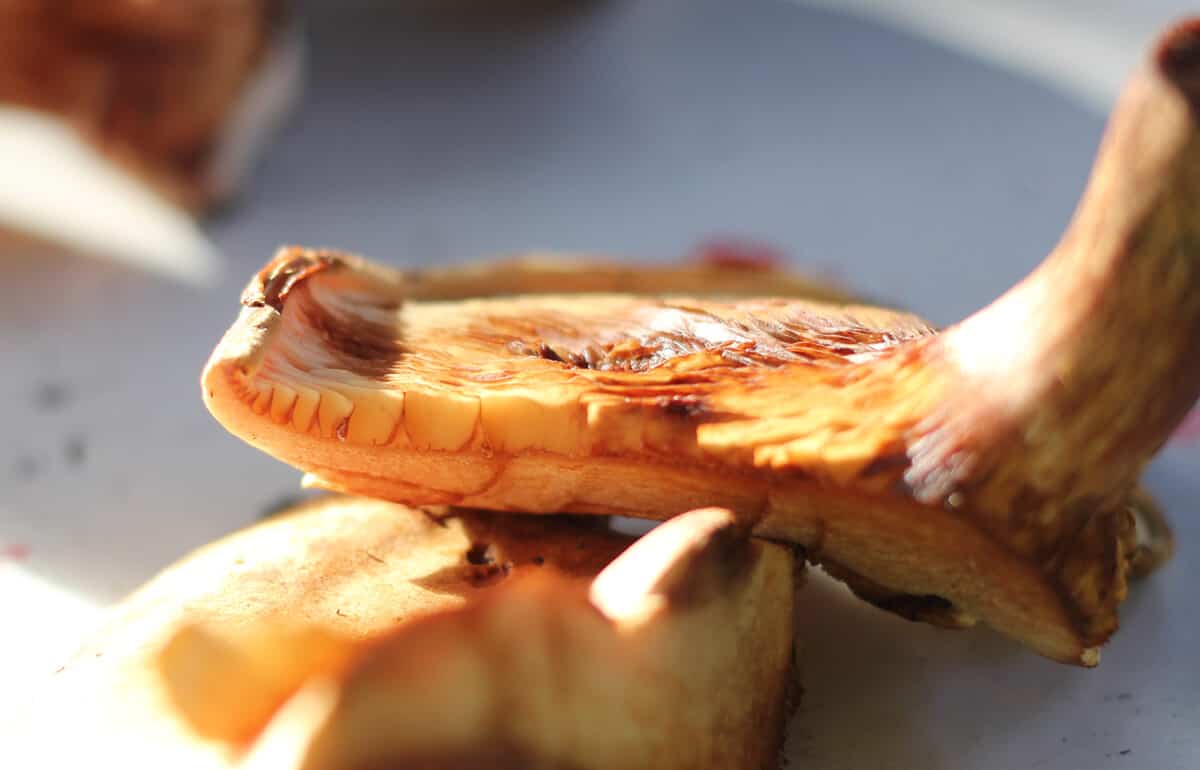
Brown Roll Rim – the Russian Roulette of Mushrooms
And a favourite of mushroom foragers, the Chanterelle. It is quite unique, although there is a False Chanterelle – still edible but not quite as nice. These, and the following in the pic below, were amongst those used in the food we ate at the end… the Chanterelles are the orangey ones at the top right, with the one in the middle being a Hen of The Woods, found on Oak, and with distinct fronds. 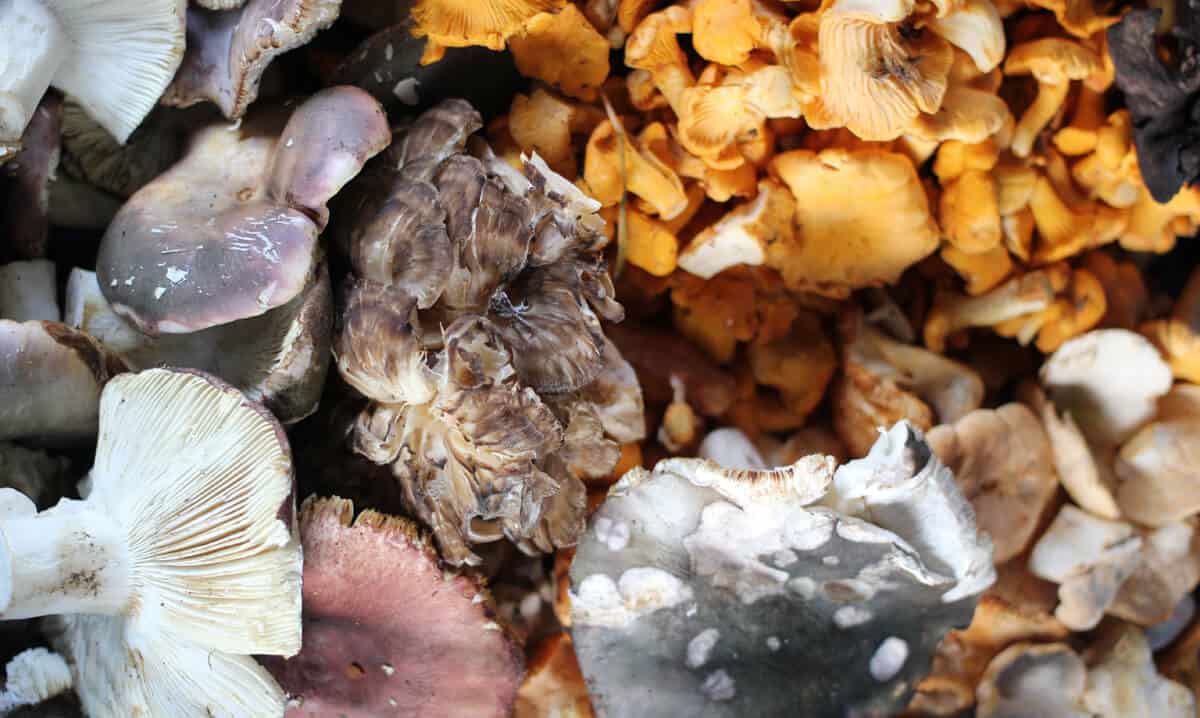
The Hedgehog Mushroom, easily identified by little spines under the cap, looking like creamy blobs on the forest floor, are also good to eat.
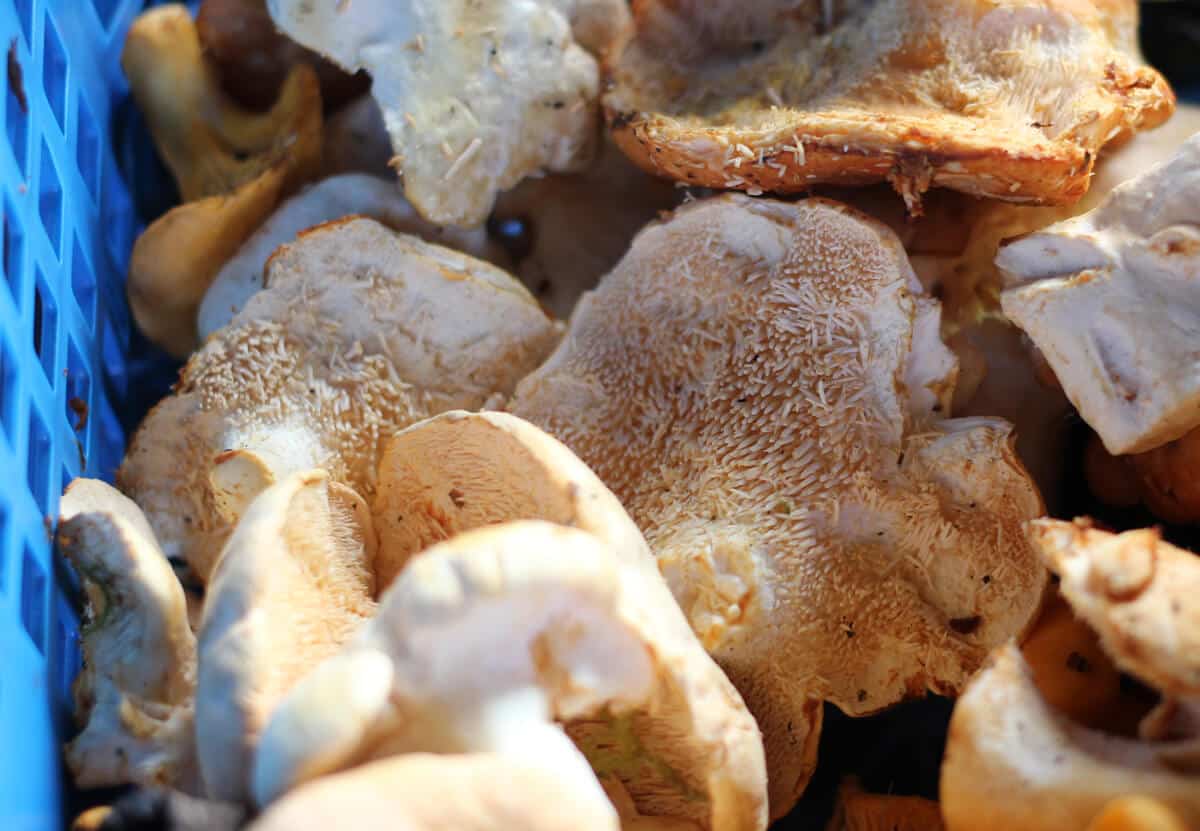
Hedgehog Mushroom
And with that, the whole point of the outing (well, also to be in the company of like-minded people, have a wander in the woods, and get some fresh air) was to eat what we had found. This dish hit the spot nicely!
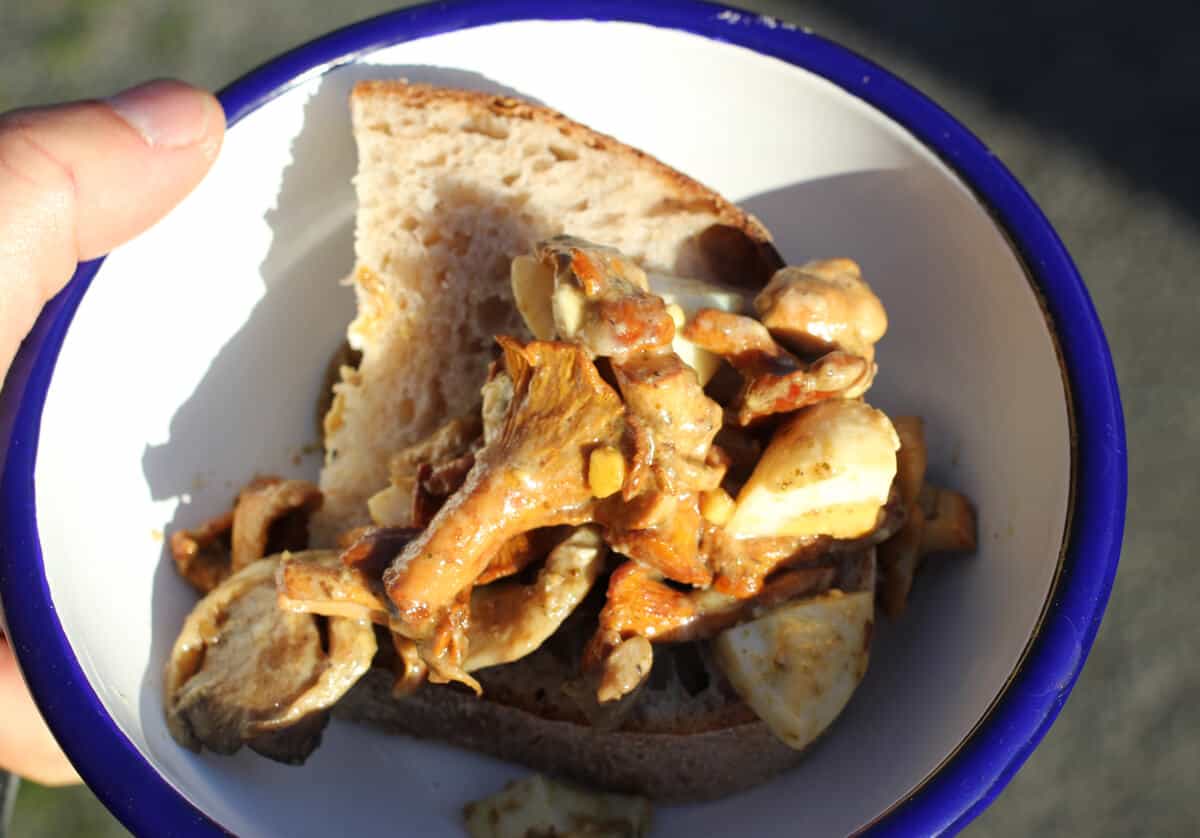
Never tasted anything like it! Absolutely scrummy. We would have paid good money for this.
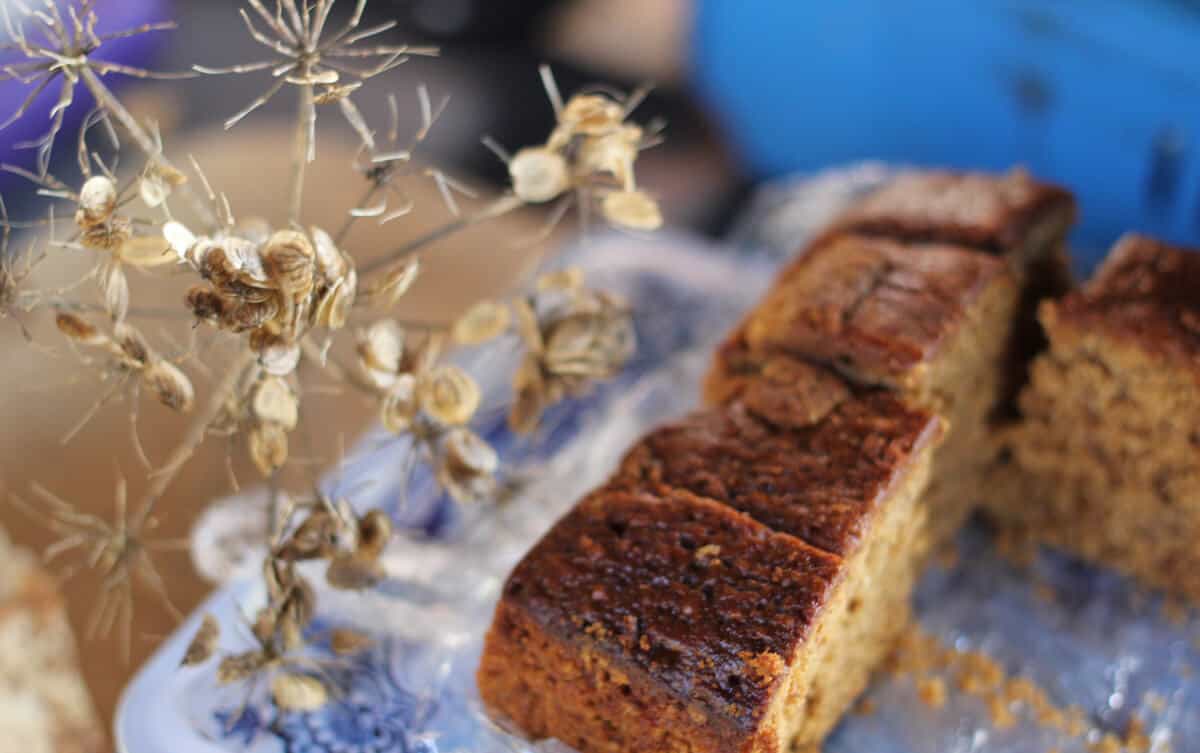
Hogweed seed cake.
Followed by a little piece or two of cake, flavoured solely with powdered Hogweed seeds – which you will see everywhere around the country. These are probably the most underrated wild food we can imagine – tasting like Cardamom, orange, ginger, lemon all at the same time. There just isn’t any need for anything else in the cake. (Apart from actual cake.)
Well, we are sure you will agree, Caerlaverock certainly has some fine foraging spots!
If you are interested in more mushrooms, check out our earlier post when we discovered the Fly Agarics. Mark assures us it is indeed edible, but there is a certain preparation to be followed. The Fugu fish of Fungus, if you will. OK, Fugu is much worse. The whole mystique around mushrooms means they do come with a certain apprehensiveness approaching them for the first time in the wild, but we will tell you it actually made for a more fascinating experience.
Thank you to Mark – who was a real fun guy (sorry, we had to), and the team at Scottish Natural Heritage or hosting these amazing events!
So if you fancy getting out and about, because really, nothing compares to actually being there, foraging, discovering, learning – and tasting! Then find out more on Mark’s website: Galloway Wild Foods.
The purple one does not look Edible. But it is? Mushrooms are weird.