
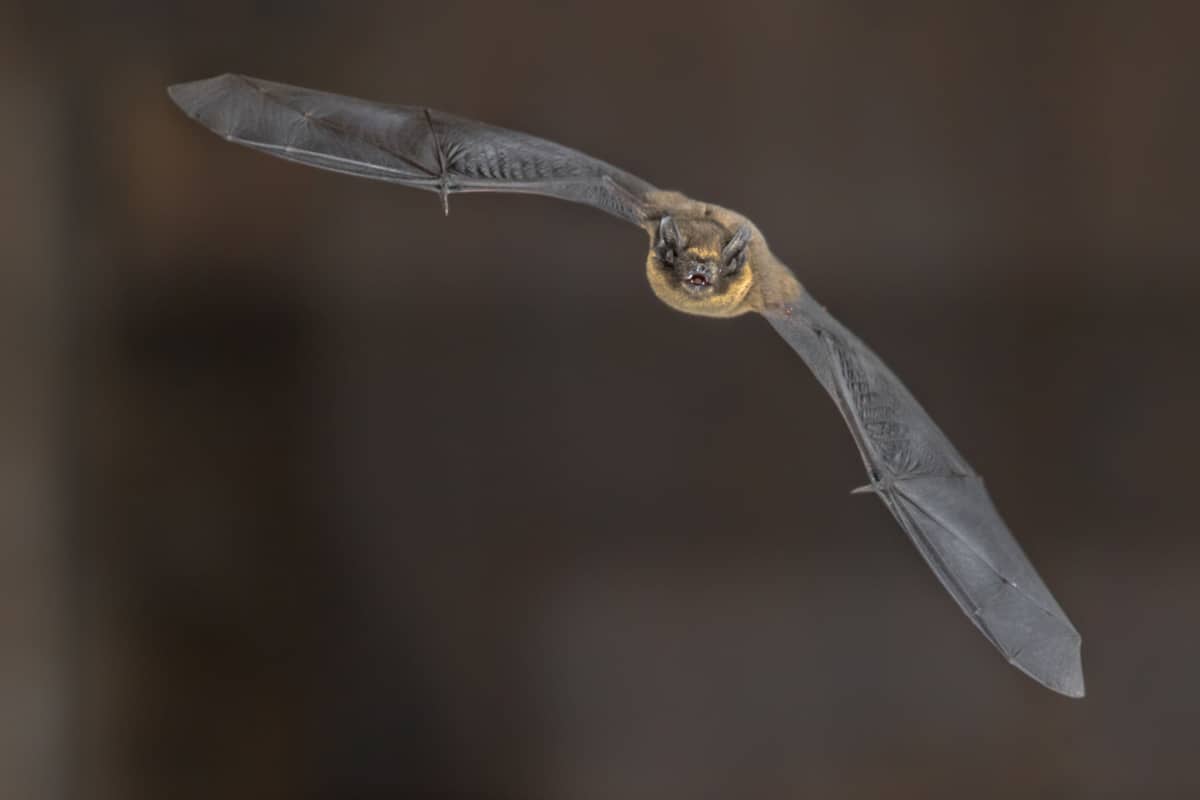
First stop, after leaving the wood, was the old (previous) castle ruins, an area surrounded by trees and an excellent place to see bats. It was starting to get quite dark by now and everyone was given a bat detector. Rhiannon, WWT Warden and bat specialist, suggested likely frequencies we could tune in to and it wasn’t long before we picked up a signal at 20 kHz from a Noctule Bat, one of Scotland’s largest bats and one of the first to appear in the evening. We watched it flying above the tree-tops. During the next half hour we found both Pipistrelle species: the Common Pipistrelle on 45 kHz and Soprano Pipistrelle on 55 kHz. Fascinating.
We eventually had to tear ourselves away, however, and, keeping the detectors turned on, we proceeded up the track to the castle, pausing again when we detected a really strong signal from a Pipistrelle hunting over a line of trees right next to where we were standing. On arriving at the castle, a Barn Owl flew out from the battlements. Sarah Bilous, the castle Steward, unlocked the massive, heavy castle door with an equally massive iron key and ushered us in, the door swinging shut behind us. In daylight the castle doesn’t seem particularly spooky, but in darkness on a dreich October night … well, it felt safe enough in a group but I’m not sure how many of us would fancy spending a night there on our own.
We lined up overlooking the moat to look for Daubenton’s Bat, a species often found flying over water to catch midges, caddisflies and mayflies just above the surface. We waited patiently but eventually had to admit we were out of luck – it’s a chance you take when watching wildlife, and nobody minded at all as the whole experience had been so memorable. Just before we left, Adam asked everyone to turn off their torches and bat detectors and we just stood still and listened in the darkness to the sounds of the night. Magical.
Back to earth, and following a meticulous head-count outside the castle, we retraced our steps through Castle Wood, our torches at one point picking out a pair of bright eyes in the undergrowth. The consensus: just a cat. Thank you to Adam Murphy of Scottish Natural Heritage, Rhiannon Hatfield of the Wildfowl and Wetlands Trust and Sarah Bilous of Historic Environment Scotland for a truly memorable night’s wildlife watching.
We are so lucky to have such interesting places to visit on our doorstep, with habitats and wildlife to explore and the skilled and experienced people willing to guide us and to learn from!
We can’t wait until the next one, many thanks again Alison!
Main image: Common Pipistrelle (Pipistrellus pipistrellus) www.bats.org.uk/commonpipistrelle.pdf
Leave A Comment