

Thank you to Nature Reserve Officer Adam Murphy Adam for this super blog – it’s on the SNH website, but we have a longer version to share with you here…
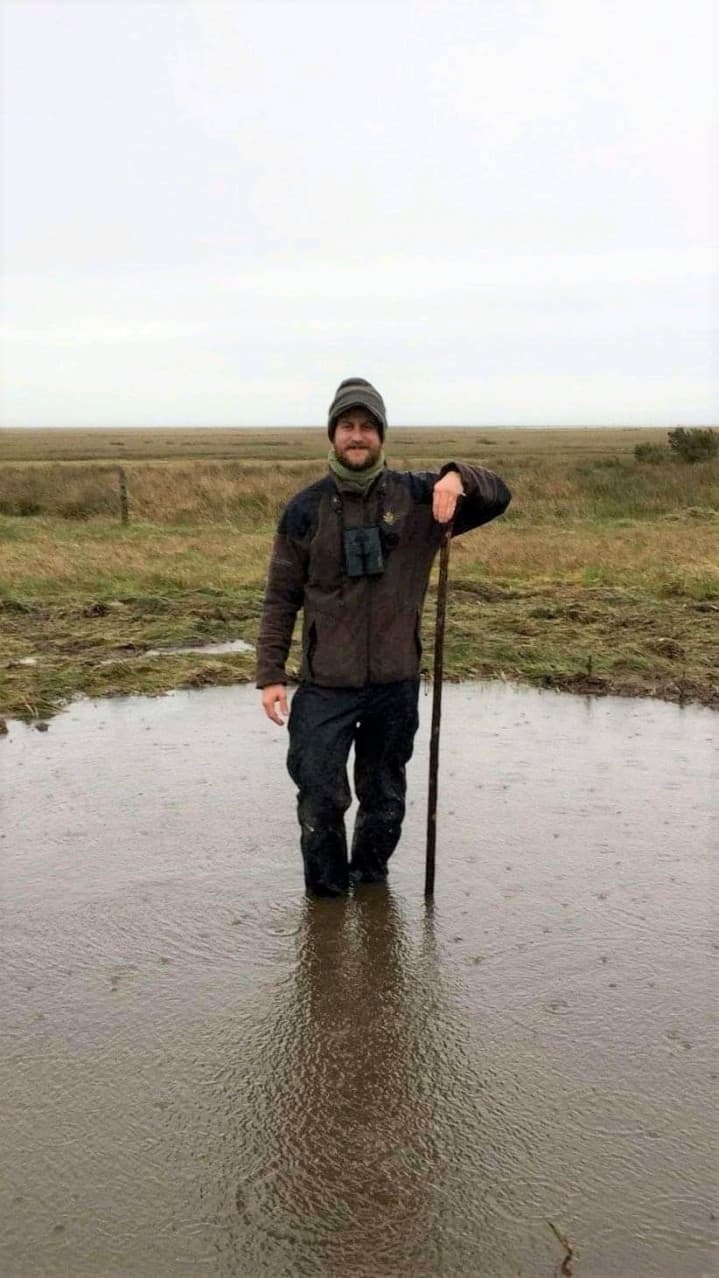
Adam Murphy
I’m Adam Murphy based in Dumfries Office. I have just completed a part time secondment to cover a national advisor post for Amphibians and Reptiles and the new year mark my full time return to my permanent role as a Nature Reserve Officer. The aim of our management plan is to form a balance between maintenance, monitoring of habitat and wildlife on Dumfries and Galloways National Nature Reserves whilst enthusing the public to engage with these unique places in a positive and nonintrusive manner.
As you can imagine with such a dynamic places to work, there’s no such thing as a typical day at the office. It is the start of a New Year and with our own ambitious and eclectic plans for the year ahead, a quick look at my January calendar shows I’m fully booked up with planned tasks and requests until mid – march, not bad when we’ve only been back to work a week.
Tasks for the next week ahead, include meeting a farmer to discuss salt marsh management and creation of new natterjack toad breeding pools, a team meeting request with a bonus file review- the meeting note reads “there will be cake!!”, shame I’ll have to miss that one. Week ahead also includes more practical tasks such as plan a volunteer work party for woodland path maintenance, take SNH pick-up truck in for puncture repair and catch up with peatland restoration work as Kirkconnell Flow.
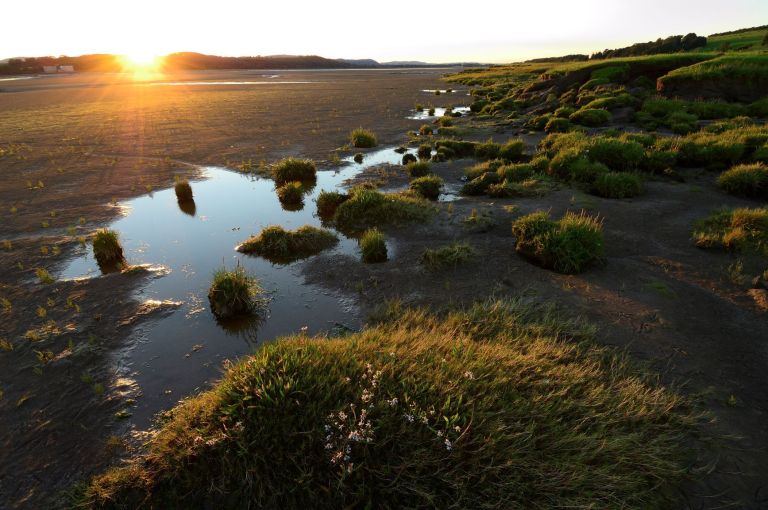
Mudflats and saltmarsh at Caerlaverock NNR © Lorne Gill SNH
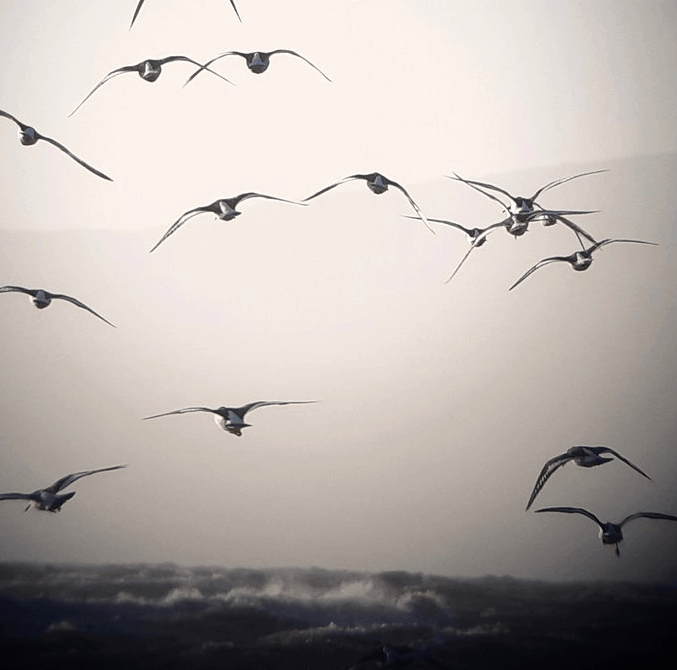
Oystercatchers © Stephen Rutt
Today’s activity is at our flag ship reserve, Caerlaverock NNR, the task is a familiar one after 5 years in the role, but never predicable. Andy (my colleague), Malcolm, a work placement student, and Stephen our newest volunteer, are heading out to do WeBS, a national water bird survey co-ordinated by BTO.
Today’s survey is part of what is called core counts, which are undertaken once a month at high tides, following the full moon.
We focus our resources on autumn to spring numbers of wildfowl and waders visits peak from August to April; Caerlaverock and the wider Solway turns into a real avian airport, with over 100,000 duck, geese and waders either spending their entire winter hear or as a pit stop, roosting and re-fueling on their long flight to warm winter climbs in the south or heading back north to artic breeding grounds.
The section we are covering today is 6km of saltmarsh (merse) and mud flats, at high tide you can’t simply walk from A to B owing to the deep inland creeks and drains that flood at high water. We decide to spilt into two teams Andy and Malcolm start at Browwell in the West and Stephen and I, from Moss-side in the East, we will walk towards each other and count birds at predetermined roosting spots along the route, if we are discreet and fleet of foot we can get in front of the birds and wait for them to come inland towards our hidden positons and count them as they settle down to rest on the edge of salt marsh, to wait out the hide tide.
The challenge is that we are getting the tail end of storm Brendan, and it persistently gusting at 50 – 60 mph +, this is not uncommon on the reserve as there is very little shelter out on the exposed estuary. Wind burn is as much, if not more a likely hazard for reserve staff in South west Scotland as sunburn. The wind is going to make a relatively straight forward task a little bit more interesting, as this will influence several factors, mainly due to the south west nature of the wind this will push the tide into the estuary quicker will more wave action, or “white horses” as we call it. It means a task were stealth is important, we are going to struggle to communicate with each other.
Arriving at the start point, at a farm down a private track, we park a stone’s throw from the high water mark, in spite of the wind, conditions still look good, in previous years I have sat hear unable to open the car door with windscreen wipers on rapid mode and waves crashing onto the gravel in front of the car.
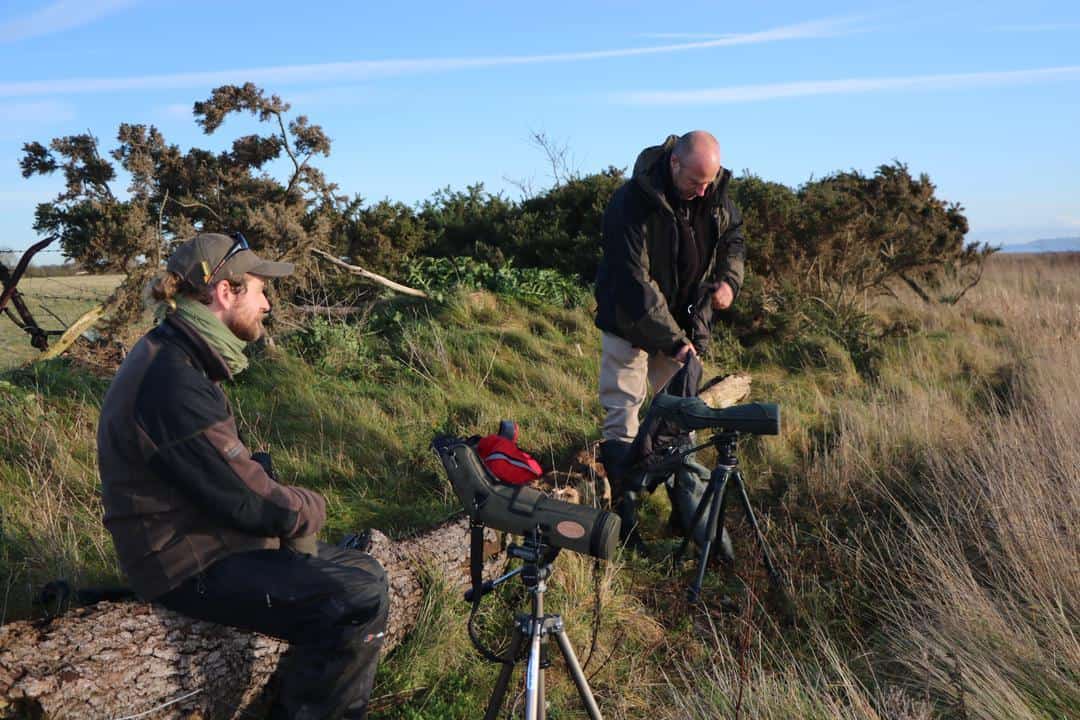
Adam and Andy counting © Suzanne McIntyre
After successfully managing to get the car door open and after losing count of the number of times the telescopes nearly blew over, finally got in a sheltered enough position to try and count the main wader roost. Unfortunately we weren’t the only folk who wanted to make the most of the conditions and the roost soon took off after two shotgun shots dully thudded somewhere nearby, a quick scan with the binoculars picked up two wildfowlers and their gun dogs.
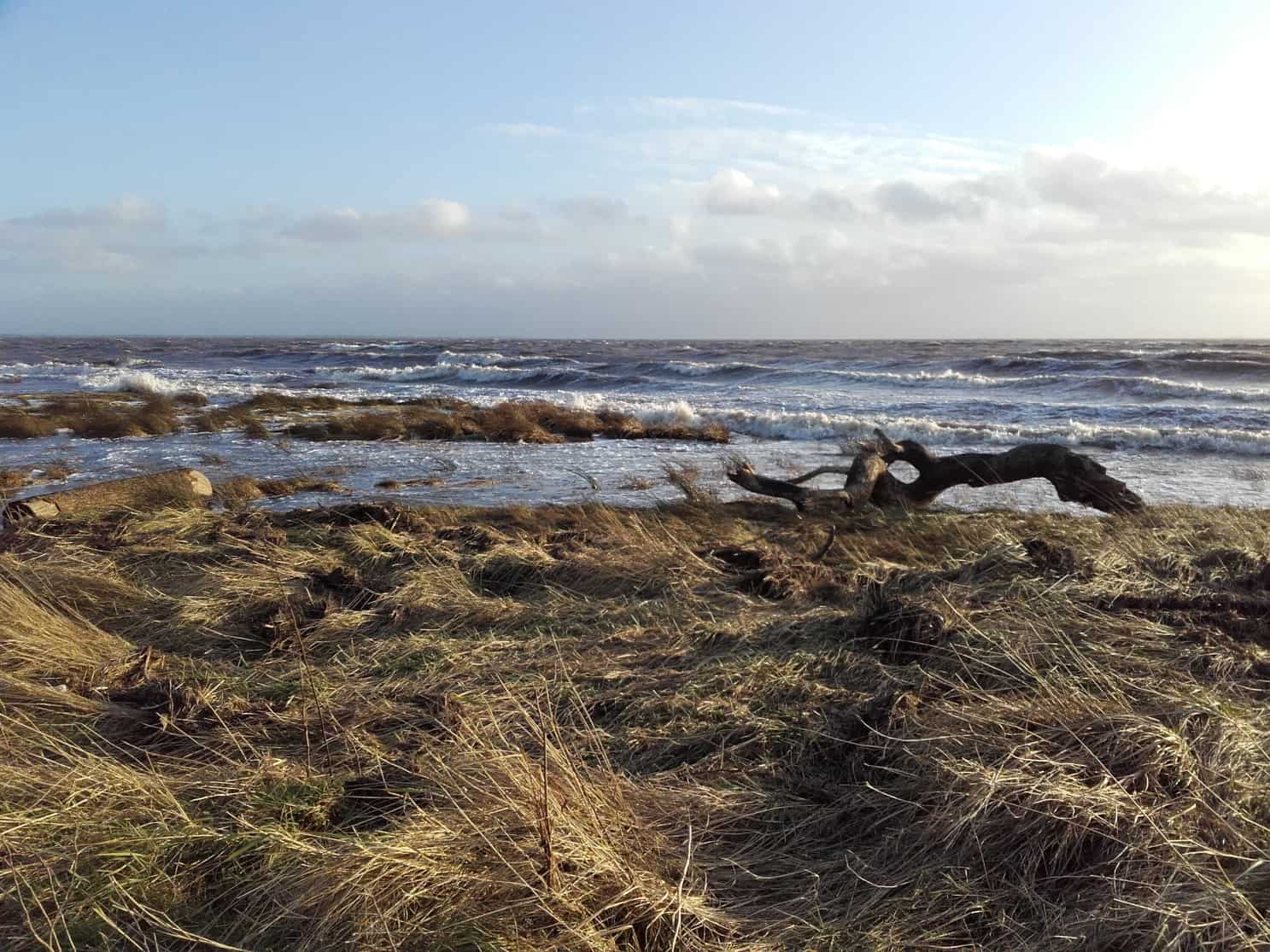
Caerlaverock waves © Adam Murphy
I explained to Stephen they had come out to shoot the tide, meaning try to get a duck or two for the pot as they fly closer to the shore line trying to find refuge from the wind. Although the shooting soon calmed down, the birds wouldn’t settle on the roost flying repeatedly from the merse to an inland rain flooded field halfway through each count, leading us a merry dance. We manage to identify and count most of the usual suspects, but struggled with one exceptionally restless flock, which we narrowed down to either Golden/Grey Plover or Knot, two wader species that fly in dazzling tight murmurations twisting and turning to confuse avian predators.
I decided to film the birds, partly with this blog in mind but also thinking to take a closer look back in the comfort of the office. After struggling to hold the camera still I gave up and whilst I was fumbling to pack it away again the birds flew directly over our heads. In the bright sunshine and not paying full attention I saw flashes of golden backs and white rumps, I shouted to Stephen “Golden Plover I reckon or maybe Knot…”, he replied “definitely not!”, we continued the pantomime moment of shouting over the wind “definitely not what!?”. He had in fact said “Definitely Knot!” and he was right as the birds kindly settled briefly in the field long enough for us to confirm the species was in fact the confusingly name, Knot.
With the main identification work complete and the scope rescued from toppling for the final time we decided to head back. Just before we reached the car I got down on my knees to take a last photo out to sea, although I heard Stephen calling something excitedly behind me, I was determined to get this shot.
Typical, just as I had committed to a photo seaward the action was inland. Stephen had his binoculars up facing a hedgerow and was shouting “Kingfisher! Kingfisher!” and I’d missed it. As we are usually surveying away from fresh water and river systems a kingfisher is extremely rare for us, and although Stephen described it was the slowest Kingfisher he had ever seen it had still eluded me. Another pantomime gag springs to mind, but as I often say to visitors that’s all part of the magic of wildlife watching, if you saw what you excepted to see every time you stepped out into nature you soon get bored of it. This surprise element of a walk in the wild, is certainly part of what keeps me coming back for more, plus the fact that I have the privilege of it being part of my job.
Find out more about SNH and the Year of Coasts and Waters.
Very interesting report Adam . RSPB Vol and Member from Saltholme Valda.