
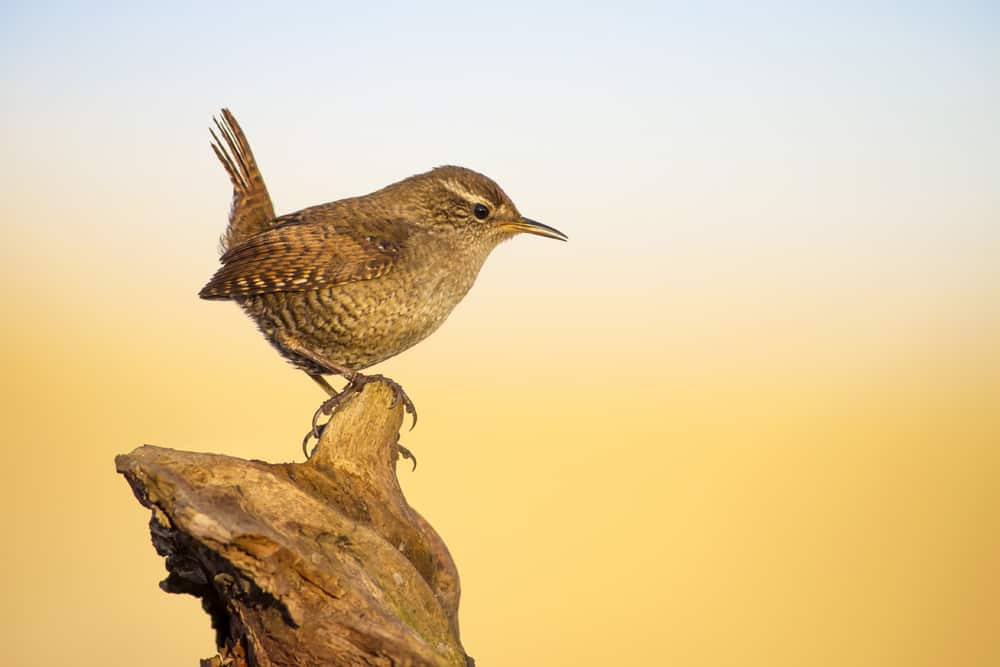
As if to beautifully illustrate the work of the North Solway Ringing Group (as mentioned in our barn owl article), Duncan Irving, of the NSRG has sent us his 2016 bird ringing report from Kenneth Bank, Caerlaverock!
I’m sure there will be many of us who had no idea that there are folk up at the crack of dawn year in, year out collecting and recording this data!
The British Trust for Ornothology (BTO) explain that ringing aims to ‘monitor survival rates of birds and collect information about their movements. This information provides vital support for conservation efforts as it helps to understand how these processes influence population sizes over time; identifying the mechanisms is the first step in reversing declines’.
Duncan’s report and annotations make fascinating reading, and demonstrates the sheer dedication and skill involved in this considerable task!
We hope to accompany Duncan, Steven and their team in the spring to take some photos and see their work first hand. Watch this space!

 Report of Birds Caught and Observed at Kennethbank (Phyllis’s Corner / Fishers’ Bush NY004662) in 2016
Nineteen ringing visits of approximately four hours each were carried out using two 18m mist nets.
407 individual birds and 28 species were caught. This compares with 298 birds and 26 species from 15 visits in 2015.
Even allowing for the difference in effort, the results suggest that the bird population has increased in recent years.
Data quoted as site records are for the period from 2005 – 2016 inclusive. 39 species have been caught during this period.
Resident Species
Water Rail One was heard calling on 16 August.
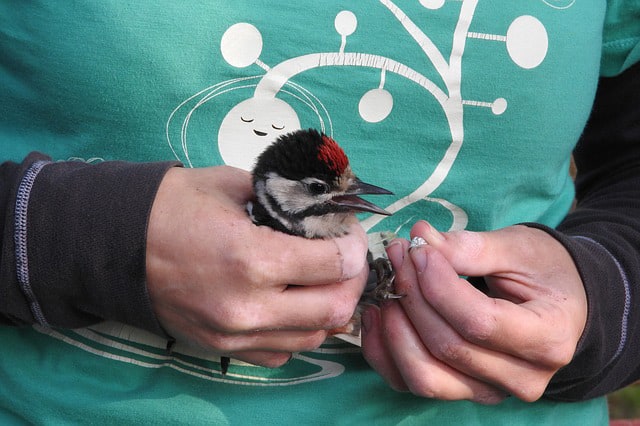
Great Spotted Woodpecker One was heard drumming on 10 May. An adult female was caught on 7 October.
Meadow Pipit An pair of adults and one juvenile were caught compared with seven birds in 2015. The male, caught on 8 May, had been ringed in 2013 as a second year male.
Dunnock All six Dunnocks caught were juveniles.
Robin Robins continued to increase. Of two adults caught, one had been ringed as a juvenile in 2015.
Song Thrush An adult male had been ringed as a one year old in 2015 It was the only Song Thrush caught last year and was one of three adults present in 2016. Four juveniles were also trapped.
Blackbird An adult male, ringed in 2012, and known then to be at least 2 years old, was re-trapped for the first time since 2013.
Two other adult males had been ringed as one-year-olds, and a third was not aged.
No adult females were netted during the previous two years but one was caught in 2016.
Two juveniles were ringed, one was a female; the other one’s sex was unknown.
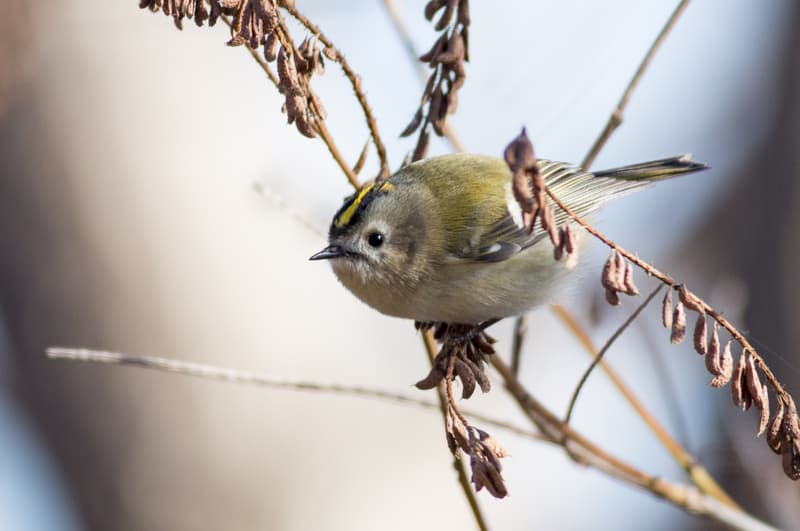 Goldcrest All thirteen birds caught were juveniles. This was more than twice the site record of six, set in 2004 and repeated in 2015.
The nine males and four females, trapped between 17 September and 21 October, may have been passing through.
Wren All twenty-one birds were new to the site. Seventeen were juveniles, four were adults.
Great Tit There were three 1 year old birds; two were males and one female. The other twelve were juveniles. It appears that Great Tits had a poor breeding season with some nestlings not surviving to fledge.
Coal Tit The six Coal Tits ringed were all juveniles.
Blue Tit Three retraps were all females, one was an adult when ringed in 2013; the others were both ringed in 2015, one as an adult and one as a juvenile.
As with Great Tits, the Blue Tits did not have as good a breeding season.
Willow Tit No Willow Tits were trapped in 2016. The last capture was in 2014 when two were ringed.
Long-tailed Tit Although more Long-tailed Tits were caught in 2016 than last year, numbers can vary greatly depending on where the flock is foraging when trapping is taking place. Nevertheless it is safe to say that the population is stable and has recovered from the 2012 low brought about by two cold winters in succession.
Retraps from previous years included:
a male ringed as an adult in 2013 and caught again in 2015;
a female ringed in 2014 when it was a juvenile and
an unsexed bird ringed as a juvenile in 2015.
Treecreeper The Treecreeper population has increased again following a jump in numbers in 2015. Only one bird, ringed in 2015 as a juvenile was recovered from previous years.
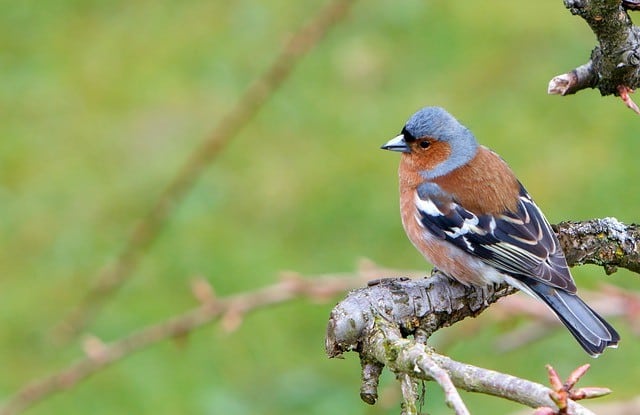 Chaffinch An adult male was caught that had been ringed in 2015 as a 1-year-old.
Numbers were well down on 2015 and none of the birds caught was recaptured so the birds were probably very mobile,
Only two juveniles were caught so the breeding success was probably low.
Linnet A 1-year-old male was the only Linnet caught in 2016.
Linnets have been caught in nine of the twelve years. The average catch was 4 birds per year.
Goldfinch Four adult males and three females were caught between 8 May and 6 July.
Thirteen juveniles were ringed, all except one in October.
The total was a record number for the site. There has been an increase in the local population but the ten birds caught on 2 October was unprecedented.
Greenfinch A pair of adults, caught together on 12 June, were the only Greenfinches ringed. Breeding was not confirmed as no juveniles were caught later in the summer.
Reed Bunting A male ringed on 6 April 2012 as a one-year-old was captured again in 2015 and 2016. It was probably the one that sang relentlessly from the reedbed to the north of the small wood. Its mate was likely to have been a female caught in 2015 as a 1-year-old. The table shows the classification by age and sex. The majority of the birds of unknown sex were likely to have been females but some would have been males that had not moulted in enough of their adult feathers to identify them as such.
The total of thirty-three was a record number for the site mainly due to the increased number of visits.
Yellowhammer The only Yellowhammer was a 1-year-old male caught on 15 March.
Summer Migrants.
Common Redstart An adult female was ringed on 29 June and a juvenile on 6 July.
The only other records for this species were two juveniles caught in the second week of August 2015 and two adults in April 2007.
Garden Warbler The three Garden Warblers caught consisted of two adults, probably a pair, and a juvenile.
Last year, no juveniles were ringed. Garden Warblers have been caught every year from 2005 onwards. The maximum total to date was eight in 2011.
Blackcap Five adult males, an adult female and eight juveniles were ringed. All the adult males except one were caught in May so breeding probably did occur in the area. The small number of females caught suggests that they were less mobile than males during the breeding season. The total was slightly down on 2015, which was a record year for the species.
Whitethroat Four birds were ringed; three adults on 8 May and one juvenile on 16 August. The numbers have been lower than this since 2006 when six were caught.
The maximum was seven in 2005.
Lesser Whitethroat None was found in 2016. The last one was ringed in 2012.
Sedge Warbler Two adult males returned in 2016; one was a juvenile in 2015, the other was ringed as an adult in June 2013 and has been back every year since then. This is not particularly unusual for the species but Sedge Warblers tend to be less site-faithful than some of their near relatives such as Reed Warblers so this bird will looked for with interest into the future (with permission of course).
The total of forty-four individuals caught was a record for the site and was a large increase on the twelve found in 2015. Twenty-one were new adults with the males arriving in early May. Many of these would have moved on up the valley.
Twenty-one juveniles were ringed.
Reed Warbler One of the two adult Reed Warblers caught was an adult male when it was ringed at the site in May 2013. It was caught again in 2015.
The other was ringed as a juvenile in 2015. Its sex is unknown.
The presence of a juvenile on 25 August was welcomed as it probably fledged nearby.
Willow Warbler The total number of Willow Warblers captured, forty-two, was similar to last year’s record total.
Twenty-eight were juveniles; fourteen were adults including two birds that were first caught in 2015. One of these was a juvenile when ringed last year and the other was an adult male.
The dates of first and last captures were 8 May and 25 August respectively.
Chiffchaff Chiffchaff numbers increased dramatically to sixty-four compared to twenty- one in 2015. The previous record was twenty-seven in 2011.
Four birds were adults; a pair caught on 8 May and two others in late June, one a male and the other of unknown sex.
None of these, nor any of the sixty juveniles, was recaptured which would indicate that most birds were on passage when caught.
The final capture was a juvenile caught on 21 October.
It was satisfying to find evidence to show that many of the various species of birds found at the site have probably established stable populations, especially the small residents that were badly affected by the cold winters earlier in the decade.
There were no recaptures of birds ringed elsewhere or recoveries elsewhere of birds ringed at Kennethbank.
Eight members of North Solway Ringing Group, including Steven Jackson, Faith Hillier and Rhian Davies took part. I am grateful to them for their help and for making the experience of managing the project more enjoyable.
 Special thanks go to Steven Jackson for helping with the maintenance work and to North Solway Ringing Group for its support.
I am also grateful to SNH for allowing me to monitor and ring birds at Kennethbank.
Duncan Irving,
North Solway Ringing Group