
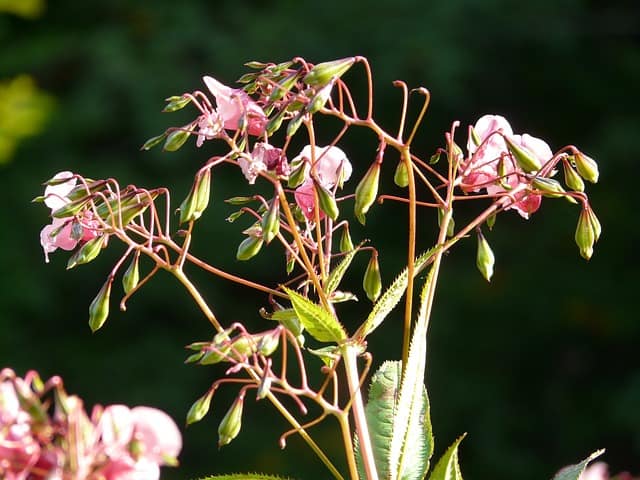
Photo shows the invasive species Himalayan balsam – spreading throughout the UK (via its explosive seedheads), including along the banks of the River Nith
Invasive Species are non-native species of plants or animals which have been introduced, or found their way here. Whilst many introduced species are harmless, others are more problematic causing economic as well as environmental disruption and damage. They can cause mono-cultures, taking over expanses of land, stopping our native plants – or any other species – from growing. They threaten our native wildlife through competing for food and habitat, and they can introduce diseases to which our natives have no immunity. They have a tendency to spread rapidly, engulfing and overtaking our native species.
Some better known examples are: giant hogweed, Japanese knotweed, laurel, grey squirrel, harlequin ladybird, American signal crayfish.
We have seen plenty Himalayan Balsam along the shores of the Nith, and the estuary to the Solway – and wonder what other invasive species lurk around Caerlaverock…
The RAFTS (Rivers and Fisheries Trusts of Scotland) Biosecurity and Invasive Species Programme are asking for us to report our sightings to them using the map on the link below:
and click the following link to help with the identification of specific invasives: