
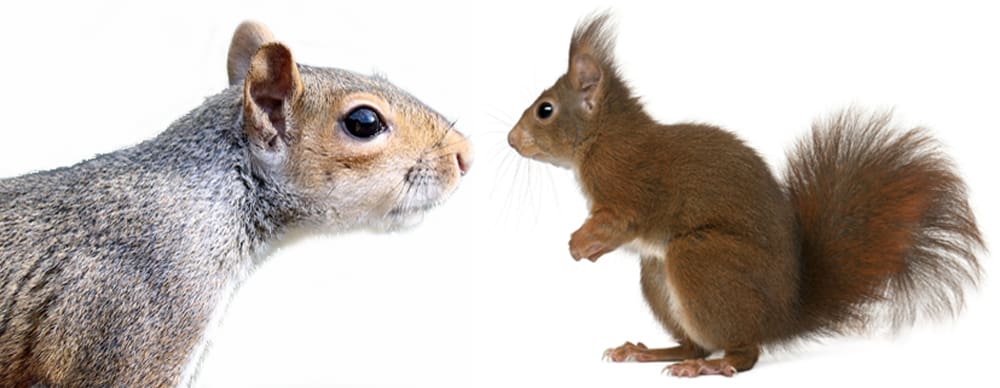
Brenda Craik has been in touch to alert us that she has seen a grey squirrel in her Glencaple back garden…
Cute as they may look, you may already know that they are in fact a real threat to our endangered native red squirrel population (who are also very much cuter).
Saving Scotland’s Red Squirrels project tell us that
Fewer than 120,000 red squirrels remain in Scotland, 75% of the total UK population. Without urgent action they could disappear from our shores within a generation.
In fact, The red squirrel is one of the most threatened species of mammal in the UK… (www.snh.gov.uk/docs/A40765.pdf)
If you spot a squirrel – red or grey – you can record the sighting at scottishsquirrels.org.uk/squirrel-sightings/
This simple online form from Saving Scotland’s Red Squirrels allows you to fill in details (e.g. red or grey, was it dead or alive, where was it seen), as well as showing an interactive map of Scotland with the locations of squirrel sightings (image below).

And from the SNH Red Squirrel information document:

Brenda has been in touch with the SWSEIC – South West Scotland Environmental Information Centre (former DGERC), Adam at Caerlaverock NNR and also Saving Scotland’s Red Squirrels (links below). She is awaiting responses on what action she/we/they can take, and will keep us posted as soon as she hears.
Identification is quite easy – though some red squirrels can be a bit grey, and young ones may not have the ear tufts.
This picture from the Trees for Life page is a quick guide to red squirrel identification:
 Above habitat loss, the greatest threat to the red squirrel is the larger grey…
Edited from the SNH red squirrel page:
Their biggest problem is the introduced grey squirrel who were brought over from North America in the late 19th and early 20th century by people who thought they would make an attractive addition to our parks.
Unfortunately grey squirrels survive well, out-competing the smaller, more specialised red squirrel. Once found across Britain, red squirrels have been lost from most of England and Wales. Scotland has the largest proportion, with an estimated 121,000 of the 160,000 British population living in our woodlands, parks and gardens.
Grey squirrels also brought disease. While grey squirrels have developed resistance to many viruses and diseases, our red squirrels are not immune. In particular squirrelpox virus which is fatal to red squirrels. It is currently found only in South Scotland but, this virus has proved very hard to contain and the rest of the Scottish population could be at risk very soon. This is possibly the single greatest risk to the future of red squirrels in Scotland.
Contact details:
SWSEIC: swseic.org.uk/about-swseic/contact-us/
(they are looking for all wildlife recordings in South West Scotland, not just squirrels).
Adam at Caerlaverock NNR: adam.murphy@snh.gov.uk
Saving Scotland’s Red Squirrels: scottishsquirrels.org.uk/contact-us/
And the direct link to their recording form: scottishsquirrels.org.uk/squirrel-sightings/
Other links:
Trees for life red squirrel id page: treesforlife.org.uk/work/identification/
SNH document: www.snh.org.uk/pdfs/publications/naturallyscottish/redsquirrel.pdf