

To conclude our series of conversations with Stephen Powell, we asked him about the war years in Glencaple. As with the previous parts, Stephen bravely allowed us to use the actual audio recordings (so you can hear his stories in his own words).
Click on these links if you missed parts one and two, and would like to read/ hear them first.
Stephen started off by telling us about the only two cars in Glencaple around about the start of the war. Click on the link below to hear the audio recording.
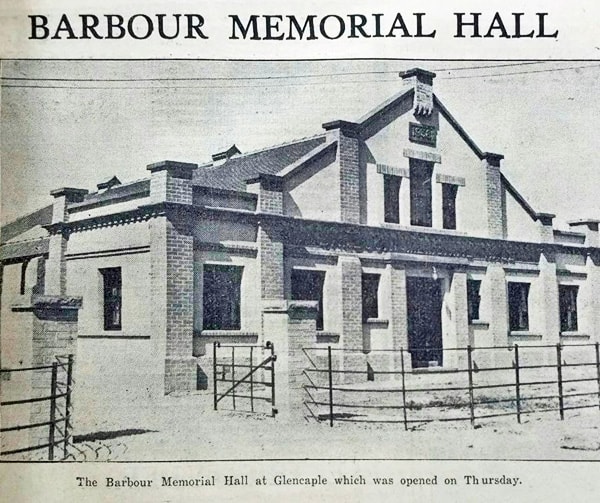 Stephen went on to explain about life in Glencaple during the war, “From the point of view of the village, we were fully put on a war footing here”. He explained how the home guard would parade with broomsticks, “I can remember them drilling with no rifles” and he has memories of the black-out and of a warden – just like in Dad’s Army – who would have been a local ‘well known, retired chap’. Listen to Stephen talk about it here:
Considering our rural location, Stephen explained, “The nearest we got to the war was German bombers going over to bomb Clydeside – you could hear them and for years we used to come out at night and hear the drone sound going up and down. People would say that you could tell they were German engines because that’s what their engines do”.
Stephen always thought it was funny that German engines should sound different to anyone else’s and he could never find anybody who would give him an answer to this… But years after the war (around 1960), he read an article about it and found out that the Germans had *magnetos. He read that ‘they were altering the pitch of the noise they sent out, so that we couldn’t get a good fix of where they were’.
“Why nobody could tell me that I don’t know!”
*Magneto – a small electric generator containing a permanent magnet and used to provide high-voltage pulses, especially (formerly) in the ignition systems of internal-combustion engines.
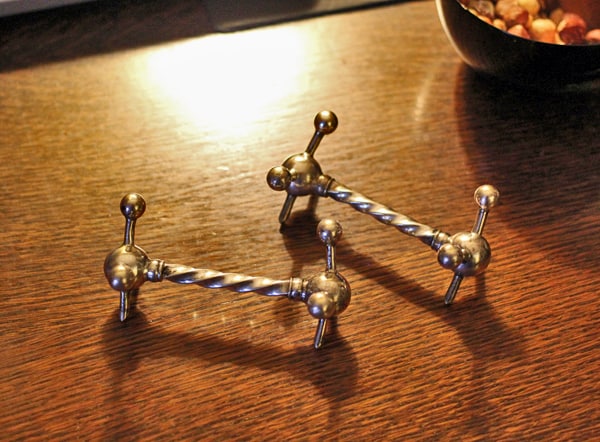 One of the main lines of defence in Glencaple were the anti tank road blocks called ‘knife rests’.
As further defence against invasion, Stephen recalled, “They upgraded the road across from the telephone box by drilling holes and putting man hole covers in”. He went on to describe how they could “put bits of railway line, lying beside the roadway, in the holes so that should the Nazis ‘pull a fast one’ and slip round Lands End and up through the Irish Sea, and get their tides right, and get here and land, then we could put these bits of railway line into the manhole covers, and they wouldn’t be able to get past!
But, typical Nazi trick, they’d probably go around the other side!”
Hear Stephen talk more about the wartime defence in Glencaple:
Stephen went on to recount a rather exciting happening in the woods at the top of the hill above Glencaple during the middle of the war…
 His mother confiscated the 3 bullets the boys had found, which they weren’t too happy about, but Stephen’s father took them, removed the cordite and returned them. “That was exciting”!
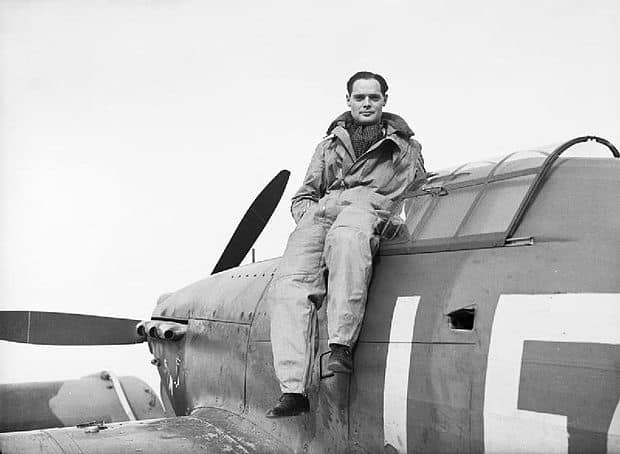
According to the plane’s log book, it had once actually been flown by Douglas Bader [a Royal Air Force flying ace during the Second World War who was credited with 22 aerial victories, four shared victories, and eleven enemy aircraft damaged].
Having talked about the Spitfire, Stephen suddenly had a thought – it wasn’t a Spitfire at all – it was in fact a Hurricane!
Image: Bader sitting on a Hurricane, Duxford, September 1940.
Thanks to the Old Dumfries Facebook group for use of some of their pictures above.
Many thanks again to Rob Wells and Sue Greig for their help and support during this process, and of course, a huge thank you to Stephen himself for giving his time and trust, and for courageously agreeing to be our first ‘guinea pig’ candidate!